Summary: NICE CXone is a cloud contact center platform offering ACD, IVR, and AI tools; the broader market is projected at $85 billion in 2026, making alternatives worth evaluating.
The contact center software market is expanding at a remarkable pace. The market is worth an estimated USD 85.04 billion in 2026 and is growing at a CAGR of 16.72%, according to a Mordor Intelligence report. For US businesses seeking a reliable, scalable solution, evaluating NICE call center software alongside other cloud platforms is an essential step toward modernizing customer communications.
Whether you manage a healthcare practice, a legal firm, or a high-volume sales team, the right contact center platform can transform how your organization handles inbound and outbound interactions. Strong growth in this sector stems from enterprises pivoting away from rigid voice-centric telephony toward cloud-native, AI-orchestrated engagement platforms that reduce call-handling time and improve customer experience metrics. Understanding what NICE CXone offers, where it falls short, and how alternatives such as our Cloud Contact Center Software compare will help you make a well-informed decision.
What Is NICE CXone and How Does It Work?
NICE CXone is a cloud-based contact center platform developed by NICE Ltd. It is designed to manage customer interactions across voice, email, chat, and social media channels from a single interface. The platform targets mid-market and enterprise organizations that need to handle large volumes of customer communications with consistency and efficiency.
At its core, CXone includes an Automatic Call Distribution (ACD) system that routes incoming calls to the most qualified available agent. It also features an Interactive Voice Response (IVR) system built to handle high call volumes by offering self-service options before connecting callers to a live representative. Additional capabilities include call recording for quality assurance, workforce engagement management tools, and AI-driven agent assist features.
NICE positions CXone as a unified orchestration platform, combining digital self-service, journey routing, and workforce management under one roof. The platform serves both inbound and outbound use cases, including customer support, sales, and telemarketing operations. However, for organizations that do not require every feature in the suite, the complexity and cost of CXone can become a significant consideration.

Key Features of NICE CXone in Detail
NICE CXone provides a broad feature set that covers multiple aspects of contact center operations. Below are the most prominent capabilities and how they serve day-to-day workflows.
Automatic Call Distribution and Routing
The ACD engine is designed to match callers with agents based on skill level, availability, and priority rules. This helps reduce customer wait times and ensures that specialized inquiries reach the right team member. For businesses managing multiple departments or product lines, skills-based routing is a practical necessity.
Interactive Voice Response (IVR)
CXone’s IVR system allows callers to navigate menus, check account information, or complete simple transactions without speaking to a live agent. Industry data shows that wait times over five minutes cause 40% of callers to hang up, which makes efficient self-service options critical for customer retention.
Call Recording and Quality Management
Every interaction can be recorded, stored, and reviewed for training purposes or compliance requirements. This is particularly important for industries such as healthcare, finance, and legal services, where regulatory oversight demands thorough documentation of customer communications.
AI-Powered Agent Assist and Analytics
NICE integrates AI tools that provide real-time guidance to agents during calls. These tools suggest responses, surface relevant knowledge base articles, and flag sentiment changes. The global call center AI market was valued at approximately USD 3.98 billion in 2025 and is projected to reach USD 4.89 billion by 2026, according to Giva’s compilation of call center statistics. This trajectory highlights the growing demand for AI-driven contact center tools.
Workforce Engagement Management
CXone includes scheduling, performance tracking, and gamification features aimed at improving agent productivity and reducing turnover. These capabilities give supervisors visibility into agent adherence, forecasting accuracy, and coaching opportunities.
Pricing and Total Cost Considerations
NICE does not publicly list granular pricing for CXone on its website, which can make budget planning difficult for smaller organizations. Industry sources indicate that CXone pricing typically starts in the range of $71 to $209 per agent per month, depending on the tier and feature set selected. Enterprise-level deployments with advanced AI and workforce optimization often exceed these figures.
Around 35% of small and medium-sized enterprises report financial strain in adopting advanced software solutions due to complex infrastructure requirements, according to a Global Growth Insights market report. This financial barrier is worth acknowledging, especially when evaluating platforms like CXone whose pricing model favors larger organizations with substantial per-agent budgets.
By contrast, solutions designed with SMBs in mind often offer more transparent, tiered pricing. Our Hosted VoIP and Cloud Contact Center platform, for instance, starts at $16.99 per user per month, requires zero hardware investment, and deploys in days rather than weeks. For teams that need enterprise-grade reliability without the enterprise-grade price tag, this cost difference is meaningful.
Where NICE CXone May Fall Short
No platform is without trade-offs. Understanding the potential drawbacks of CXone helps you weigh whether it is the right fit for your team size, budget, and operational needs.
Complexity for smaller teams. CXone is built to serve large-scale operations. Organizations with fewer than 50 agents may find the platform over-engineered, with features and configurations that add unnecessary overhead. Setup, customization, and ongoing administration often require dedicated IT resources or NICE professional services.
Opaque pricing. The lack of publicly available, straightforward pricing makes it challenging for budget-conscious decision-makers to compare options. Many businesses report needing to engage with NICE sales representatives to receive a tailored quote, which lengthens the procurement process.
Integration challenges with legacy systems. About 31% of call centers struggle with software interoperability between legacy and digital systems. While CXone offers open APIs, migrating from older on-premise PBX infrastructure to NICE’s cloud environment can present friction, particularly for organizations in regulated industries.
After-hours coverage gaps. CXone provides tools for managing live agents, but it does not natively offer an always-on AI voice agent that handles calls around the clock without human staffing. For practices such as dental offices, medical clinics, or legal firms that receive important calls outside business hours, this can lead to missed opportunities. Our Intelligent Voice AI Agent addresses this gap with 24/7 automated call handling, appointment scheduling, and FAQ responses.
How the Cloud Contact Center Market Is Evolving in 2026
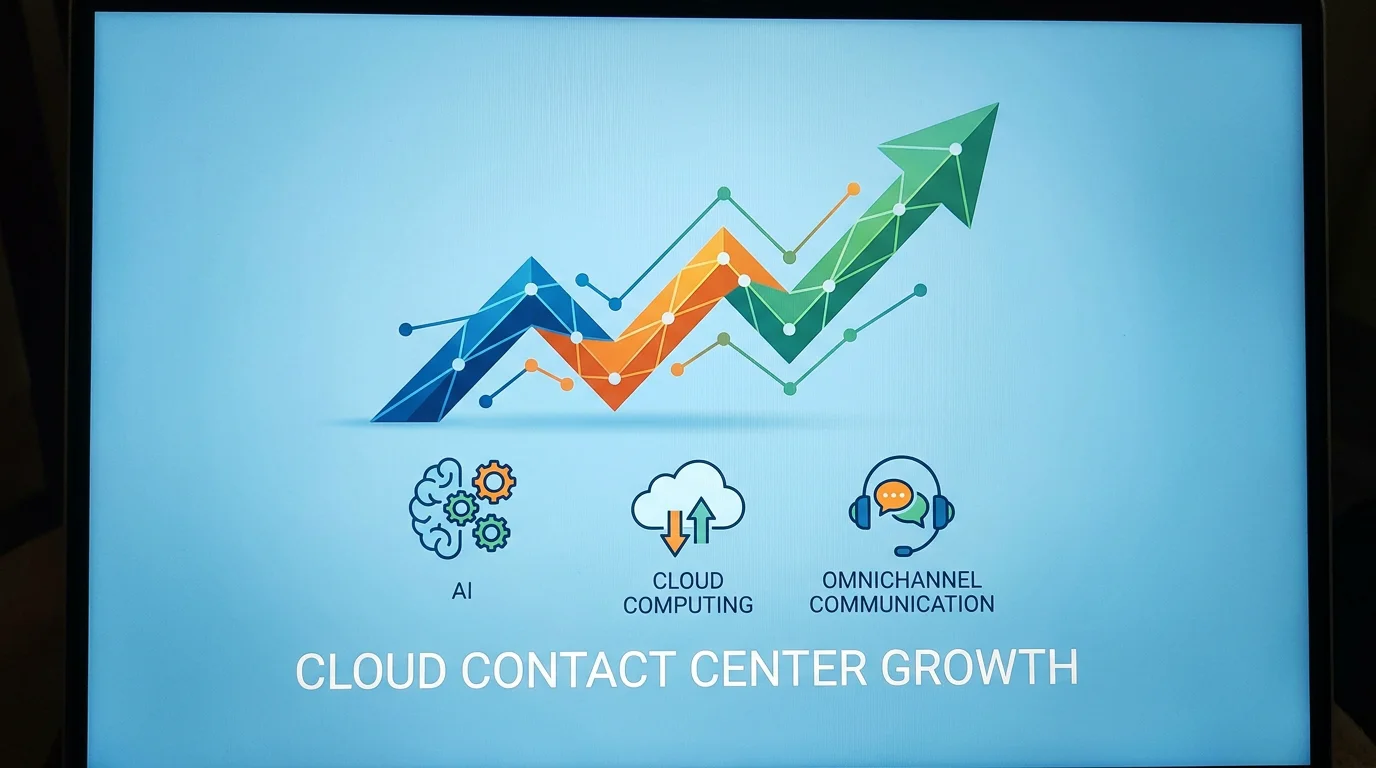
The broader market context is important when evaluating any single vendor. The global contact center software market was valued at USD 63.88 billion in 2025 and is projected to grow to USD 77.82 billion in 2026, reaching USD 263.75 billion by 2034 at a CAGR of 16.50%, according to Fortune Business Insights.
Several key trends are shaping how businesses select and deploy contact center solutions in 2026:
- AI-first architectures: Generative AI agents now handle a growing share of routine inquiries, freeing human agents for complex or emotionally sensitive interactions.
- Cloud migration acceleration: Nearly 39% of enterprises globally have migrated from traditional call handling systems to cloud-based solutions, and that percentage continues to climb.
- Omnichannel engagement: Customers expect seamless transitions between voice, chat, email, and social media without repeating their issue.
- Real-time analytics: The global speech analytics market is growing at an estimated 15.6% CAGR from 2025 to 2030, reflecting the growing importance of real-time performance insights.
These trends favor platforms that combine simplicity of deployment with powerful AI and analytics capabilities. Organizations that cannot justify the complexity or cost of enterprise suites are increasingly turning to focused, cloud-native alternatives.
Comparing NICE CXone With Cloud-Native Alternatives
When evaluating call center software, it is helpful to compare key criteria side by side. The table below places CXone alongside our integrated platform to illustrate where each solution fits best.
| Criteria | NICE CXone | Cloud Vision Technologies |
|---|---|---|
| Deployment Speed | Weeks to months (complex setup) | Days (no hardware required) |
| Starting Price | ~$71/agent/month | $16.99/user/month |
| 24/7 AI Voice Agent | Not natively included | Built-in, handles calls, scheduling, FAQs |
| Hardware Requirements | Minimal (cloud-based) | $0 hardware required |
| Best Fit | Large enterprises, 100+ agents | SMB, mid-market, and enterprise |
| Uptime Guarantee | 99.99% (enterprise tier) | 99.9% uptime guarantee |
| Integrated Products | Modular (add-on pricing) | 3 integrated products from one provider |
For US businesses in healthcare, legal, financial services, real estate, or retail, the ability to deploy quickly, keep costs predictable, and maintain 24/7 coverage is often more valuable than having access to an extensive feature catalog that may go underutilized.
What to Look for When Choosing Call Center Software
Selecting the right platform requires more than comparing feature lists. Here are the criteria that should guide your evaluation:
Total cost of ownership. Look beyond the per-seat price. Factor in implementation fees, training costs, hardware needs, and the internal resources required for ongoing administration. About 26% of enterprises cite ongoing maintenance and training costs as major barriers to full-scale deployment.
Speed of deployment. Every week spent in setup is a week of missed efficiency gains. Platforms that require no hardware and can be configured remotely offer a clear advantage, particularly for distributed teams.
Security and compliance. Nearly 28% of organizations face data security risks in cloud-based platforms. Bank-grade encryption, compliance certifications, and enterprise security protocols are non-negotiable, especially in healthcare and legal verticals.
Scalability. Your platform should grow with your business without requiring a complete migration or contract renegotiation. Look for tiered pricing that accommodates growth from a small team to a multi-site operation.
AI and automation capabilities. Consider whether the platform offers built-in AI for after-hours call handling, appointment scheduling, and real-time analytics. These capabilities directly reduce missed calls and improve customer satisfaction. Our AI Voice Agent provides exactly this, answering calls 24/7, scheduling appointments, and resolving common questions automatically.
Making the Right Decision for Your Organization
NICE CXone is a capable platform that provides a wide range of call center software features suited to large enterprises with complex workflows. Its ACD, IVR, workforce management, and AI-assist tools cover many operational needs. However, the platform’s complexity, pricing opacity, and enterprise-oriented design can make it a less practical choice for small to mid-sized organizations that need speed, simplicity, and cost predictability.
With the contact center software market projected to grow from USD 77.82 billion in 2026 to USD 263.75 billion by 2034, the range of available solutions will only widen. The best time to evaluate your options is now, while the technology landscape is rapidly improving and costs for cloud-native platforms remain accessible.
Cloud Vision Technologies offers an integrated suite of Hosted VoIP, an Intelligent Voice AI Agent, and Cloud Contact Center Software, all backed by enterprise security, a 99.9% uptime guarantee, and dedicated support. To explore how these capabilities can modernize your communications without the complexity or cost of legacy platforms, book a free demo of our cloud communications platform and see the difference firsthand.
Frequently Asked Questions
Is NICE CXone suitable for small businesses?
NICE CXone is primarily designed for mid-market and enterprise organizations with large agent teams. Small businesses may find the platform overly complex and expensive relative to their needs. For SMBs seeking a more accessible solution, our Cloud Contact Center Software from Cloud Vision Technologies provides enterprise-grade features starting at $16.99 per user per month with no hardware costs.
What is the difference between a cloud contact center and a traditional call center?
A traditional call center relies on on-premise hardware and phone lines, whereas a cloud contact center operates entirely over the internet. Cloud solutions offer faster deployment, lower upfront costs, and the flexibility to support remote agents. They also integrate more easily with AI tools, CRM systems, and omnichannel communication channels.
Can AI voice agents fully replace human call center agents?
AI voice agents are not designed to replace human agents entirely. They are most effective at handling routine tasks such as appointment scheduling, answering frequently asked questions, and routing calls after hours. This frees human agents to focus on complex, high-value interactions that require empathy and critical thinking.