Summary: Healthcare call center software streamlines patient communication with AI, HIPAA compliance, and omnichannel tools in a market projected to reach $77.82 billion in 2026.
When nearly 40% of hospitals rely on call management systems for appointment scheduling, teleconsultation, and patient query resolution, the stakes of choosing the right software for healthcare call centers have never been higher. The contact center software market alone is projected to grow from $77.82 billion in 2026 to $263.75 billion by 2034, according to Fortune Business Insights. For healthcare organizations, this growth reflects a fundamental shift in how patients expect to interact with their providers. Whether you are managing a mid-size medical practice or an enterprise health system, understanding what to look for in a contact center platform is critical. If you are evaluating platforms across industries, our overview of the best call center software provides a broader starting point.
The demands on healthcare communication have evolved well beyond basic phone trees. Patients expect seamless, secure, and personalized interactions across voice, text, chat, and email. At the same time, practices are contending with staffing shortages, rising call volumes, and strict regulatory requirements such as HIPAA. The right healthcare call center software addresses all of these challenges on a single platform, enabling providers to improve patient satisfaction while reducing operational burden.
Why Healthcare Organizations Need Specialized Call Center Software

Generic call center platforms may handle high volumes, but healthcare communication carries unique requirements that general tools often fail to meet. Patient interactions involve protected health information (PHI), clinical triage, and appointment coordination that must comply with federal regulations.
Healthcare represents about 16% of the total call center software market, with 39% of hospitals utilizing call management systems for appointment scheduling, teleconsultation, and patient query resolution. That level of adoption underscores a clear industry consensus: specialized solutions outperform generic alternatives when patient outcomes and regulatory compliance are at stake.
A purpose-built platform integrates directly with electronic health records (EHRs), offers HIPAA-compliant communication, and supports intelligent call routing based on clinical urgency. These capabilities allow front-desk teams and call center agents to provide accurate, context-aware responses without toggling between disconnected systems. For practices handling hundreds of daily calls, that integration is not a luxury; it is a necessity.
Essential Features to Evaluate in a Healthcare Contact Center
Not all platforms are created equal. When evaluating call center software for healthcare, focus on the features that directly impact patient access, staff efficiency, and regulatory compliance. Here are the capabilities that matter most.
HIPAA compliance and data security should be non-negotiable. The platform must encrypt all communications (in transit and at rest), support role-based access controls, and provide audit trails. Any vendor that hesitates to sign a Business Associate Agreement (BAA) should be removed from consideration immediately.
EHR integration allows agents to view a patient’s history, upcoming appointments, and recent test results the moment a call connects. Bidirectional data flow ensures that any changes made during the call, such as a rescheduled appointment, appear in the clinical system in real time.
Omnichannel support enables patients to reach your organization via voice, SMS, chat, or email. In 2023, 61% of businesses reported that customers used more than three communication channels for support. In healthcare, that means a patient who starts a conversation over text should be able to continue it by phone without repeating their information.
Intelligent call routing directs calls based on urgency, agent skill set, and patient history. A post-surgical patient calling about a complication should not wait behind a routine billing inquiry. AI-powered routing systems analyze caller intent in real time and escalate appropriately.
Analytics and reporting dashboards surface key performance indicators such as average wait time, first-call resolution rate, abandonment rate, and patient satisfaction scores. These metrics guide staffing decisions and highlight areas for workflow improvement.
How AI Is Transforming Healthcare Call Centers
Artificial intelligence is no longer a futuristic promise in patient communication; it is an operational reality. From automated appointment scheduling to real-time sentiment analysis, AI-powered tools are reshaping what healthcare call centers can accomplish with limited staff.
Around 36% of funding in the call center software market focuses on artificial intelligence and predictive analytics, which are transforming call routing, customer insights, and workflow automation. In healthcare specifically, AI handles routine tasks such as confirming appointments, processing prescription refill requests, and answering frequently asked questions about office hours or directions.
Virtual agents and AI-driven voice assistants can field calls around the clock, ensuring that patients receive support outside of business hours. This is particularly valuable for practices that cannot afford to staff overnight shifts but still need to address after-hours inquiries. We built our Intelligent Voice AI Agent to solve exactly this problem: it answers calls 24/7, schedules appointments, and manages FAQs automatically, so your team can focus on complex patient needs. You can explore how our automated call center software streamlines these workflows.
AI also supports agents during live calls. Real-time speech analytics can flag compliance risks, detect patient frustration, and suggest next-best actions. In 2023, sentiment analysis tools identified real-time emotional states in 33% of voice interactions, improving agent performance and reducing churn by 18%. For healthcare organizations, this translates into better patient retention and more empathetic care delivery.
Cloud-Based vs. On-Premise Deployment for Healthcare
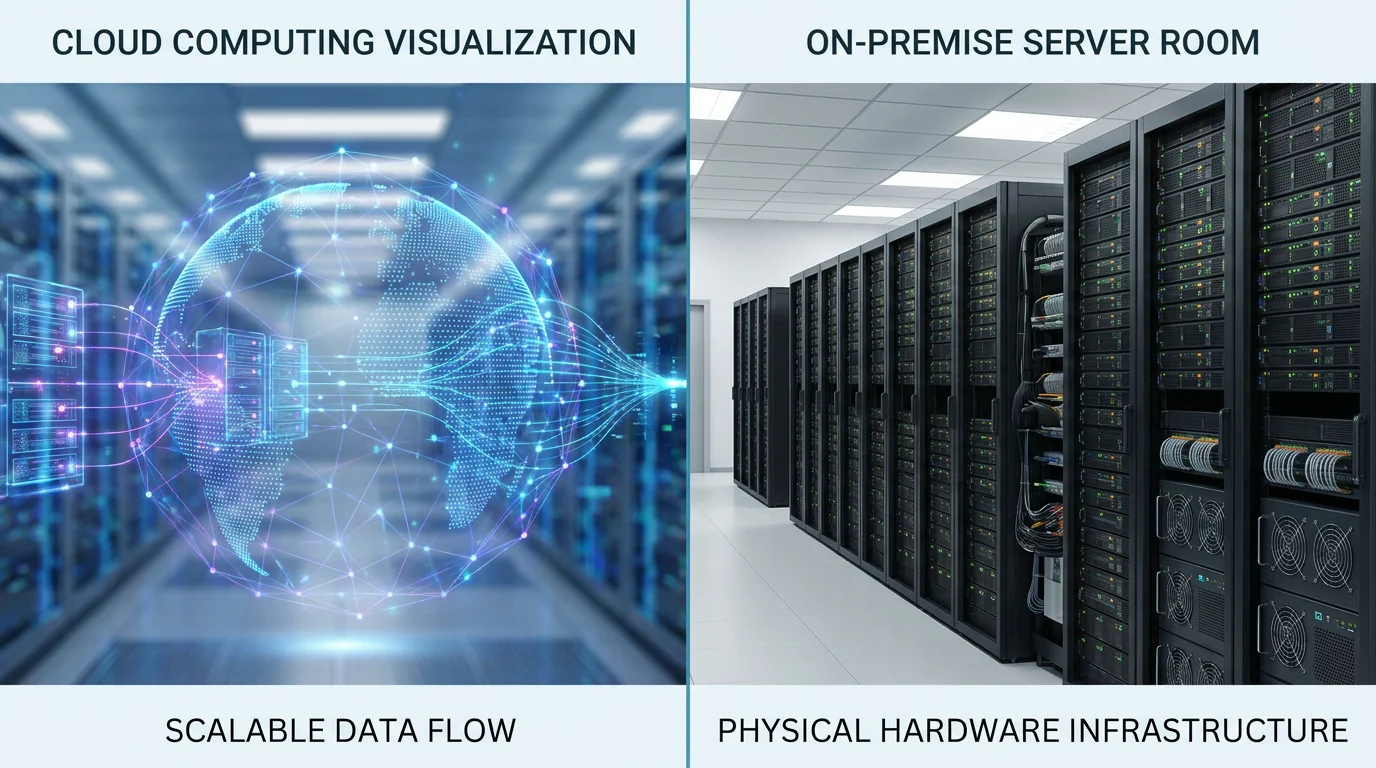
One of the most consequential decisions for healthcare organizations is whether to deploy a cloud-based or on-premise call center solution. Both models have merit, but the industry trend is decisively favoring the cloud.
In 2023, over 63% of new call center software installations favored cloud-based deployment. The reasons are straightforward: cloud solutions require no hardware, scale on demand, and allow remote access, which is essential for telehealth and distributed care teams. They also shift maintenance responsibilities to the vendor, reducing the burden on in-house IT departments.
On-premise solutions, by contrast, offer direct control over data infrastructure. The on-premise segment held an estimated 57.8% share of the total market in 2025, driven in part by industries like banking and healthcare that handle sensitive customer data and prefer full control over data access, backups, and regulatory compliance. However, this control comes with higher upfront costs, greater maintenance complexity, and limited accessibility for remote agents.
For most healthcare organizations in the US, cloud-based contact center platforms represent the more practical path forward. They offer rapid deployment (often in days rather than months), subscription pricing that reduces capital expenditure, and built-in redundancy for high uptime. Our cloud-based contact center software deploys with zero hardware requirements and includes a 99.9% uptime guarantee, making it well-suited for practices that need reliability without infrastructure overhead.
Comparing Leading Healthcare Call Center Solutions
With numerous vendors competing in this space, selecting the right platform requires a structured comparison. The table below evaluates key criteria across several solutions relevant to healthcare organizations.
| Criteria | Cloud Vision Technologies | Genesys Cloud | Talkdesk Healthcare | healow Genie |
|---|---|---|---|---|
| HIPAA Compliance | Yes (bank-grade encryption) | Yes (HIPAA, HITRUST, GDPR) | Yes (HIPAA, GDPR, CCPA) | Yes (SOC 2 Type II, HITRUST) |
| AI Voice Agent | Yes (24/7 coverage) | Yes (virtual agents) | Yes (AI Agents for Healthcare) | Yes (AI Agent) |
| EHR Integration | Via API | Epic native (Health CX) | EHR and CRM integrations | Any EHR |
| Deployment | Cloud (days) | Cloud | Cloud | Cloud |
| Hardware Required | None ($0) | None | None | None |
| Starting Price | $16.99/user/month | Custom quote | Custom quote | $249/seat/month |
| Target Audience | SMB to Enterprise | Mid-Market to Enterprise | Mid-Market to Enterprise | Medical practices |
Cloud Vision Technologies stands out for organizations that need an integrated suite (Hosted VoIP, AI Voice Agent, and Cloud Contact Center) from a single provider at a competitive price point. While other platforms offer robust healthcare-specific features, they often require custom pricing that can escalate quickly for smaller practices.
Key Performance Metrics for Healthcare Call Centers
Implementing new software is only the first step. Measuring its impact requires tracking the right key performance indicators (KPIs) on an ongoing basis. These metrics reveal whether your investment is delivering improved patient access and operational efficiency.
Average wait time measures how long patients hold before reaching an agent. In healthcare, extended wait times do not merely cause frustration; they can lead patients to defer follow-up care or switch providers entirely.
First-call resolution rate indicates the percentage of calls resolved without a transfer or callback. Higher first-call resolution directly correlates with patient satisfaction and reduced operational costs.
Abandonment rate tracks how many callers hang up before connecting with an agent. A high abandonment rate signals understaffing, inefficient routing, or overly complex IVR menus.
Patient satisfaction scores, gathered through post-call surveys, provide direct feedback on the quality of each interaction. These scores are increasingly tied to value-based care reimbursement models, making them a financial concern as well as a service quality measure.
Modern platforms with real-time dashboards allow supervisors to monitor these metrics live and intervene before small issues become systemic problems. In 2023, automation tools such as IVRs and chatbots reduced average handling times by 32%, while self-service options increased first-call resolution by 27%. These improvements represent tangible returns on a well-implemented call center platform.
Compliance and Security Considerations in Healthcare Communication
Regulatory compliance is not optional in healthcare, and it extends across every communication channel your organization uses. A single data breach can result in significant financial penalties, reputational damage, and loss of patient trust.
HIPAA requires that all electronic PHI be encrypted, access-controlled, and auditable. Your call center software must meet these requirements for voice calls, text messages, chat transcripts, and email correspondence. Strict data regulations such as GDPR, HIPAA, and PCI-DSS restrict data storage and call recording practices; in 2023, over 29% of businesses cited compliance concerns as a barrier to cloud software adoption.
Beyond HIPAA, healthcare organizations must also consider state-level privacy laws, the Telephone Consumer Protection Act (TCPA), and any applicable payer-specific requirements. The platform should automate compliance wherever possible, using two-factor authentication, automatic call recording with secure storage, and role-based permissions that limit PHI access to authorized personnel only.
When evaluating cloud contact center providers, prioritize vendors that offer enterprise-grade security certifications, transparent BAA processes, and documented compliance frameworks. A vendor’s willingness to discuss its security architecture in detail is a strong indicator of its maturity and reliability.
How to Choose and Implement the Right Solution
Selecting a healthcare call center platform is a strategic decision that affects patient experience, staff productivity, and organizational growth. A structured evaluation process will help you avoid costly missteps.
Step 1: Define your requirements. Assess your current call volume, the types of inquiries you handle (scheduling, billing, clinical triage), and the number of agents who will use the system. Identify integration requirements, particularly with your EHR and CRM platforms.
Step 2: Evaluate vendor fit. Narrow your shortlist to vendors with demonstrated healthcare expertise. Request a live demo with healthcare-specific scenarios, not generic sales presentations. Verify HIPAA compliance, uptime guarantees, and the vendor’s support model.
Step 3: Plan for scalability. Your organization’s needs will change. The small and medium enterprises segment is expected to witness high growth as competition to increase customer base grows. Choose a platform that scales with you, whether you add new locations, expand into telehealth, or increase call volume.
Step 4: Execute a phased rollout. Migrate in stages to minimize disruption. Start with a pilot team, gather feedback, refine workflows, and then expand across the organization. Ensure comprehensive training for all agents before going live.
For organizations seeking a solution that combines inbound call management, AI-powered automation, and cloud deployment in a single platform, our inbound call center software is designed to simplify that transition.
Conclusion
The healthcare communication landscape in 2026 demands more than a basic phone system. With the global contact center software market projected to reach $77.82 billion in 2026, the technology powering patient interactions is advancing rapidly. Organizations that invest in purpose-built call center software for healthcare gain measurable advantages: shorter wait times, higher first-call resolution, stronger regulatory compliance, and improved patient satisfaction scores.
The path forward requires a platform that combines HIPAA-compliant security, AI-driven automation, omnichannel communication, and seamless EHR integration, all without the burden of complex hardware deployments. Cloud Vision Technologies delivers exactly this combination through an integrated suite of Hosted VoIP, AI Voice Agent, and Cloud Contact Center solutions, starting at $16.99 per user per month with enterprise-grade security and a 99.9% uptime guarantee.
To see how these capabilities work in practice, book a free demo of our cloud contact center platform and discover the difference a purpose-built solution can make for your organization.
Frequently Asked Questions
What makes healthcare call center software different from general contact center platforms?
Healthcare-specific platforms include built-in HIPAA compliance, EHR integration, and clinical call routing that general tools do not provide. These features ensure patient data remains secure while enabling agents to deliver informed, context-aware support. Cloud Vision Technologies, for instance, combines these capabilities with 24/7 AI voice coverage and zero-hardware deployment.
Is cloud-based call center software secure enough for healthcare data?
Yes, provided the vendor meets industry security standards. Look for HIPAA compliance, bank-grade encryption, SOC 2 Type II certification, and a signed Business Associate Agreement. Cloud platforms often provide more consistent security updates than on-premise systems because the vendor manages infrastructure continuously.
How long does it take to implement a new healthcare call center platform?
Cloud-based solutions can typically be deployed within days, not months. A phased rollout, starting with a pilot team and expanding gradually, minimizes disruption to patient communication. Most organizations are fully operational within two to four weeks when working with a vendor that offers dedicated onboarding support.