Summary: Contact center platforms are projected to reach $77.82 billion in 2026, driven by cloud migration and AI. Choosing the right solution requires evaluating omnichannel capabilities, automation, and scalability.
Fewer than 3% of contact centers currently operate on a single, fully integrated technology stack, according to industry research published in early 2026. That statistic alone reveals how fragmented communication infrastructure remains for businesses across the United States and beyond. For organizations fielding high volumes of customer calls, chats, and emails, selecting the right contact center platform is no longer a back-office IT decision; it is a strategic imperative tied directly to revenue, retention, and brand reputation. If you are evaluating our cloud-based contact center platforms, the timing could not be more favorable.
The global contact center software market continues to expand at a pace that would have been difficult to imagine a decade ago. The market was valued at $63.88 billion in 2025 and is projected to grow to $77.82 billion in 2026, on track to reach $263.75 billion by 2034 at a compound annual growth rate of 16.50%, according to Fortune Business Insights. With that level of investment pouring into the space, understanding what separates a capable platform from an exceptional one is essential for any buyer.
What a Contact Center Platform Actually Does
A contact center platform is a cloud-based or on-premises software system designed to manage, route, and optimize customer interactions across multiple channels. Unlike a simple phone system, a modern platform unifies voice, email, live chat, SMS, social media messaging, and even video into a single environment where agents and supervisors can collaborate in real time.
The core purpose is straightforward: ensure that every customer reaches the right person, through the right channel, with the context needed to resolve their issue on the first attempt. Businesses adopting cloud-based platforms have achieved an average 20% improvement in agent productivity compared to legacy on-premises systems, according to Technavio market research. That productivity gain comes from features such as automatic call distribution, intelligent routing, real-time analytics dashboards, and integrated workforce management.
Platforms in this category also serve as the data layer through which AI models receive context and customer journeys are evaluated. Without a centralized platform, businesses end up managing disconnected tools that create blind spots in reporting and inconsistencies in the customer experience.
Why Cloud Deployment Has Become the Default

Cloud deployments have become the default choice, with enterprises favoring consumption-based CCaaS subscriptions that trim deployment cycles to weeks and eliminate capital expenditure. This shift, documented in a 2026 Mordor Intelligence report, reflects a fundamental change in how organizations approach customer service infrastructure.
The advantages of cloud-hosted solutions are tangible. There is no hardware to purchase, maintain, or depreciate. Scaling up or down requires nothing more than adjusting a subscription. Remote and hybrid workforces can operate from any location with an internet connection. And software updates are handled automatically by the provider, ensuring that security patches and new features are deployed without downtime.
Small and mid-sized enterprises are adopting at the fastest clip, exploiting pay-per-seat pricing to access features once restricted to multimillion-dollar on-premises suites. For US businesses in healthcare, legal services, financial services, and retail, this democratization of enterprise-grade tools has leveled the competitive playing field. Our cloud contact center solution reflects this philosophy: fast deployment, zero hardware, and enterprise security from day one.
The Role of AI in Modern Contact Center Platforms
Artificial intelligence is no longer an optional add-on; it is woven into the fabric of every serious platform on the market. From intelligent virtual agents that handle routine inquiries to real-time sentiment analysis that alerts supervisors when a conversation escalates, AI capabilities are redefining what a contact center can accomplish.
Implementing AI-powered chatbots for initial query handling has proven to deflect up to 60% of routine inquiries, freeing human agents for more complex tasks. That deflection rate, cited in Technavio’s 2026 market analysis, translates directly into lower staffing costs and faster resolution for the customers who do reach a live agent.
Large-language-model agents now close 60% of tier-1 inquiries without human escalation, delivering annual savings that can exceed $1 million per 100-seat center, according to Mordor Intelligence’s January 2026 analysis. However, AI is not without its considerations. Deployments in regulated verticals such as financial services and healthcare must account for compliance frameworks that require human oversight, which can add development costs.
The key differentiator is not merely whether a platform offers AI, but how deeply that AI is integrated. Platforms that connect generative AI to quality assurance, coaching workflows, and performance management deliver measurably stronger outcomes than those offering standalone chatbot modules. For organizations seeking 24/7 coverage without the overhead of round-the-clock staffing, our AI Voice Agent answers calls, schedules appointments, and handles frequently asked questions automatically.
Essential Features to Evaluate Before You Buy
Not every platform is built for every business. The features that matter most will depend on your team size, industry, and customer engagement model. That said, several capabilities have become non-negotiable for any organization managing meaningful call volumes.
- Omnichannel routing: Customers expect to move between channels (phone, chat, email, social media) without repeating themselves. A platform that synchronizes context across every touchpoint is essential.
- Interactive voice response (IVR): Self-service menus that collect information and route callers intelligently reduce wait times and improve first-contact resolution.
- Real-time and historical analytics: Supervisors need dashboards that surface key performance indicators such as average handle time, first-call resolution rate, and customer satisfaction scores.
- Call monitoring and coaching tools: The ability to listen, whisper, and barge into live calls enables supervisors to support agents in real time and accelerate onboarding.
- Workforce management: Automated scheduling, forecasting, and adherence tracking ensure the right number of agents are available at peak times.
- CRM integration: Native or API-based connections to your existing customer relationship management system provide agents with complete customer histories before they answer a call.
- Security and compliance: Bank-grade encryption, HIPAA readiness, and PCI DSS compliance are baseline requirements for healthcare, financial, and legal organizations.
Research indicates that 78% of consumers report that their perception of a brand was permanently altered by a single interaction with a contact center, according to data compiled by Market.us. That finding underscores why feature selection is not merely a technical exercise; it is a customer experience decision with direct revenue implications.
Comparing Leading Contact Center Platforms in 2026
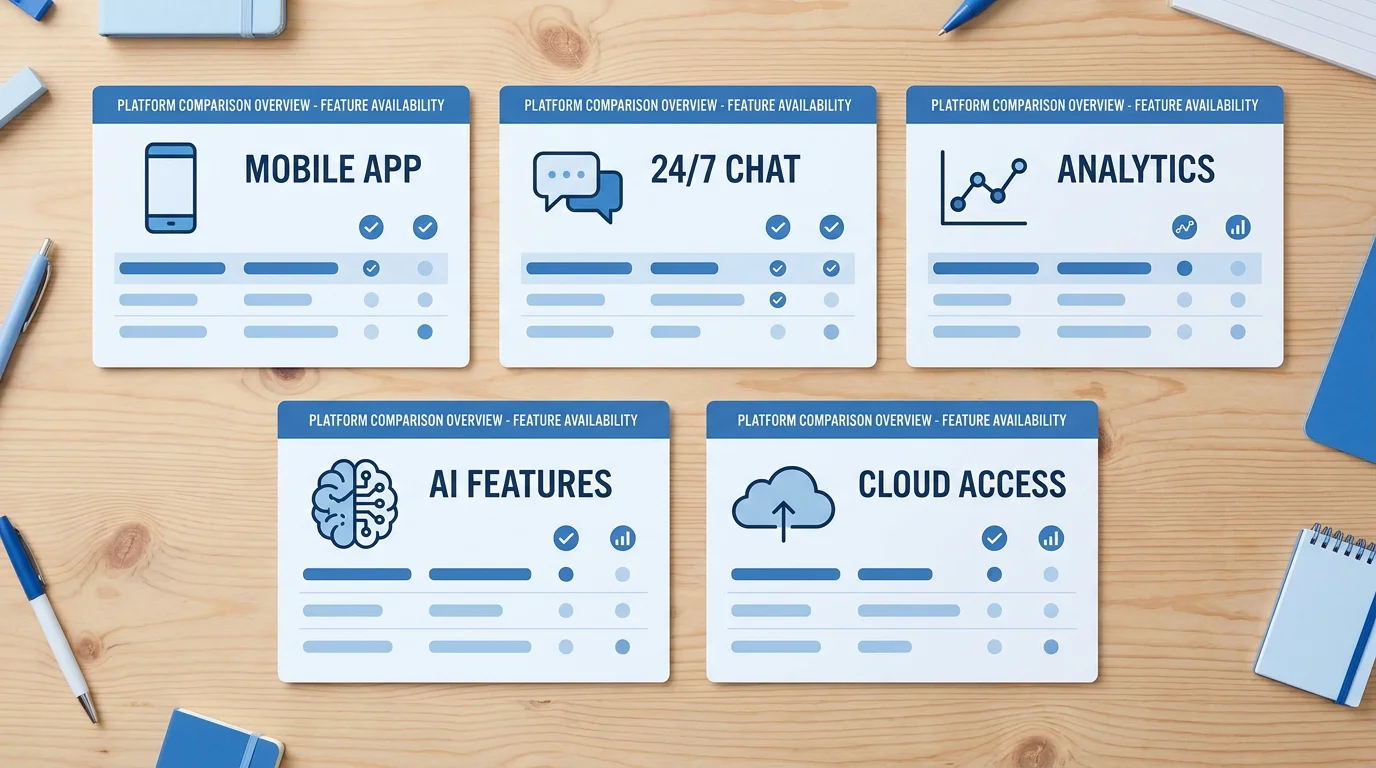
With dozens of providers competing for market share, a structured comparison is the most efficient way to evaluate your options. The table below highlights how several recognized platforms compare across critical criteria. Note that pricing and feature availability are based on publicly available information as of mid-2026.
| Platform | Starting Price | AI Capabilities | Omnichannel | Hardware Required | Deployment Speed |
|---|---|---|---|---|---|
| Cloud Vision Technologies | $16.99/user/month | AI Voice Agent, 24/7 coverage | Yes | None | Days |
| Nextiva | $75/agent/month | Built-in CRM, workflow bots | Yes | None | Weeks |
| Five9 | Custom pricing | IVA, workforce management AI | Yes | None | Weeks |
| Genesys Cloud | Custom pricing | Predictive routing, Agent Copilot | Yes | None | Weeks |
| RingCentral | Custom pricing | AI agent assist | Yes | None | Weeks |
What stands out in this comparison is the cost advantage and deployment speed that a purpose-built SaaS solution can offer. While enterprise platforms from larger vendors provide broad functionality, they often come with extended implementation timelines and significantly higher per-agent costs. For SMBs, mid-market firms, and even enterprise teams seeking rapid time to value, a leaner platform with integrated AI and no hardware burden is often the stronger choice.
Industry-Specific Considerations for US Businesses
Contact center requirements vary considerably by industry. A dental practice handling appointment scheduling and patient inquiries faces different challenges than a financial services team managing regulatory disclosures and fraud alerts. Understanding these nuances is critical to selecting a platform that aligns with your operational reality.
Healthcare and medical practices need HIPAA-compliant platforms that protect patient data while enabling appointment scheduling, prescription refill requests, and after-hours triage. The healthcare and life sciences segment is expected to grow at the highest CAGR of 13.50% among all verticals, reflecting the sector’s urgency to modernize patient communication.
Legal and professional services require call recording with strict chain-of-custody protocols, client confidentiality safeguards, and the ability to route calls based on case type or attorney availability. Missed calls in this sector can translate directly into lost clients.
Retail and e-commerce teams benefit from omnichannel platforms that connect phone support with live chat on their website, social media direct messages, and SMS order updates. Peak season scalability (whether for holiday sales or promotional events) demands elastic seat licensing.
Sales organizations need outbound dialing modes, CRM integrations, and real-time coaching tools that help representatives close more deals. Our cloud-based contact center software is designed with these verticals in mind, combining enterprise security with the agility that high-volume teams require.
How to Evaluate Total Cost of Ownership
Sticker price per agent per month is only one component of the total cost equation. Buyers who focus exclusively on subscription fees risk overlooking significant hidden expenses that can erode the anticipated return on investment.
Consider the following cost factors when building your evaluation model:
- Implementation and onboarding: Some platforms require weeks of professional services at billable hourly rates. Others, particularly cloud-native solutions, can be configured in days with guided self-service setup.
- Hardware and network upgrades: On-premises solutions often demand server rooms, dedicated internet circuits, and desk phones. Cloud platforms eliminate these capital outlays entirely.
- Integration costs: Connecting to your existing CRM, helpdesk, or EHR system may require custom API work. Platforms with pre-built integrations reduce this burden.
- Training and change management: Intuitive interfaces and built-in coaching tools shorten the learning curve and reduce the productivity dip that accompanies any technology transition.
- Ongoing maintenance: Cloud providers handle updates, patches, and infrastructure scaling. On-premises systems shift that responsibility (and cost) to your internal IT team.
The strong growth in the contact center software market stems from enterprises pivoting away from rigid voice-centric telephony toward cloud-native, generative-AI-orchestrated engagement platforms that collapse call-handling time and sharpen customer-experience metrics. Organizations that account for total cost of ownership, not just per-seat pricing, consistently make more durable technology decisions.
Emerging Trends Shaping the Market Beyond 2026
By 2026, omnichannel solutions are projected to account for 45% of the CCaaS market, driven by customer preferences for seamless, multi-channel communication. That trajectory is expected to accelerate as messaging apps, video, and even augmented reality enter the customer service conversation.
Several trends are worth monitoring as you plan your platform strategy:
- AI-to-AI interactions: Customers are increasingly using their own AI assistants to navigate IVR systems and prepare service requests before connecting with a live agent. Platforms will need to accommodate machine-generated inputs alongside human ones.
- Composable architectures: Rather than monolithic suites, buyers are assembling best-of-breed components (routing, analytics, workforce management) through open APIs. Platforms with robust integration ecosystems will hold a structural advantage.
- Vertical specialization: Generic contact center software is giving way to purpose-built solutions for healthcare, financial services, legal, and other regulated industries. Platforms that offer compliance-ready configurations out of the box will reduce deployment risk.
- Agent experience as a differentiator: Research shows that 58% of consumers would end their relationship with a business due to poor customer service, which means agent effectiveness is directly tied to revenue retention. Platforms that invest in agent coaching, performance gamification, and workload balancing will outperform those that focus solely on customer-facing features.
Emerging technologies such as artificial intelligence, cloud computing, predictive analysis, and machine learning are projected to further enhance contact center software capabilities, ensuring that the platforms organizations invest in today will continue to evolve.
Making the Right Decision for Your Organization
Selecting a platform for your contact center is a decision that will shape your customer experience, agent productivity, and operational costs for years to come. The most effective approach begins with a clear assessment of your current pain points: Are you missing calls outside business hours? Is your team struggling with fragmented tools that do not share data? Are you paying for hardware that delivers diminishing returns?
Once you have defined the problem, map your requirements against the feature categories outlined above. Request live demonstrations rather than relying on marketing materials alone. Evaluate not just the software, but the vendor’s support model, uptime guarantees, and willingness to adapt the solution to your industry’s requirements.
For US businesses across healthcare, legal services, financial services, real estate, retail, and sales, the right platform will combine cloud-based deployment, AI-powered automation, and enterprise-grade security at a price point that respects your budget. We built our cloud contact center services around exactly these principles: 99.9% uptime, zero hardware, dedicated support, and three integrated products from a single provider. To explore how our approach aligns with your needs, book a free demo of our cloud-based contact center solutions and experience the difference firsthand.
Frequently Asked Questions
What is the difference between a call center and a contact center platform?
A call center traditionally handles only voice calls, while a contact center platform manages interactions across multiple channels, including phone, email, live chat, SMS, and social media. Modern platforms unify all of these channels into a single interface, providing agents and supervisors with a complete view of every customer interaction regardless of how it originated.
How much does a contact center platform typically cost?
Pricing varies widely depending on the vendor, feature set, and number of agents. Enterprise platforms often start at $75 or more per agent per month, while cost-effective cloud-native solutions such as those offered through Cloud Vision Technologies begin at $16.99 per user per month. Total cost of ownership should also account for implementation, integration, and training expenses.
Can small businesses benefit from a contact center platform?
Absolutely. Cloud-based platforms with pay-per-seat pricing have made enterprise-grade features accessible to small and mid-sized businesses. Features such as AI-powered call handling, automated scheduling, and real-time analytics help smaller teams deliver the same level of service that was once available only to large organizations with dedicated IT departments.