Summary: Cloud contact center software unifies voice, digital channels, and AI on one platform; the market is projected to reach $22.88 billion in 2026.
The way businesses manage customer interactions is undergoing a fundamental transformation. The global cloud contact center software market grew from $19.78 billion in 2025 to a projected $22.88 billion in 2026, reflecting a compound annual growth rate of 15.7%. For organizations across the US and beyond, this growth signals a clear shift: legacy phone systems are no longer sufficient to meet customer expectations. Whether you serve healthcare patients, legal clients, or retail shoppers, the pressure to deliver seamless, multi-channel experiences is intensifying. Our cloud-based contact center software is built to address exactly that challenge.
Yet rapid market growth also means an overwhelming number of options. Choosing the wrong platform can result in wasted investment, fragmented data, and frustrated agents. This article walks you through the essential capabilities of cloud contact center software, the forces shaping the market in 2026, and the criteria that matter most when selecting a solution for your organization.
What Is Cloud Contact Center Software and How Does It Work?
A cloud contact center is a web-based platform that manages all customer communications (voice, email, chat, SMS, social media) through the internet rather than on-premises hardware. Instead of maintaining physical servers and PBX equipment, your team accesses every tool through a browser or application, from any location with a stable connection.
The underlying architecture relies on Voice over Internet Protocol (VoIP) for calls and secure cloud infrastructure for data storage, routing logic, and analytics. When a customer reaches out, the platform identifies them through CRM integration, classifies intent using natural language processing, and routes the interaction to the most qualified available agent. After resolution, the system logs the conversation, generates summaries, and updates records automatically.
This model eliminates capital expenditure on hardware, removes geographic restrictions on staffing, and ensures continuous software updates without downtime. CCaaS operates on a subscription model with the infrastructure hosted in the cloud by service providers, reducing capital expenditure and offloading maintenance and upgrades to the provider while offering greater scalability and flexibility.
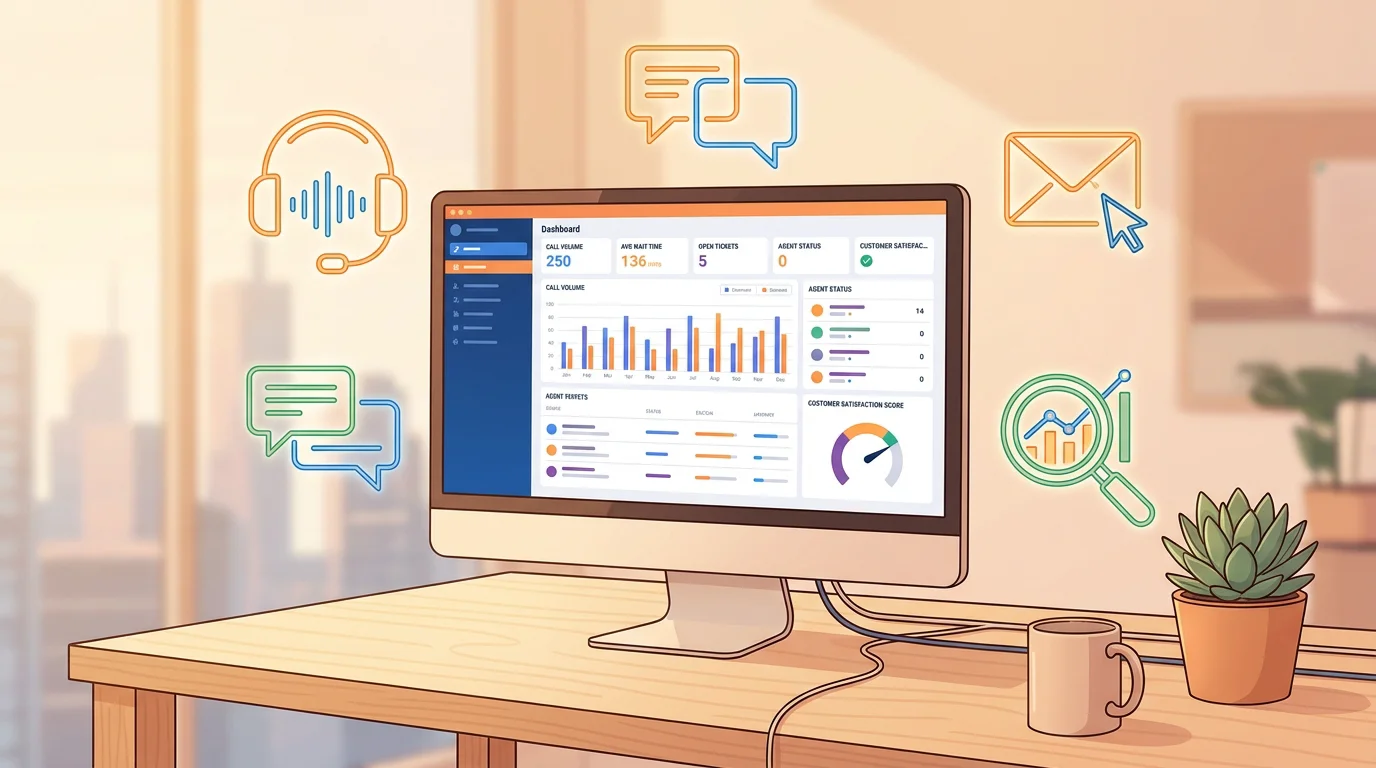
Key Market Forces Driving Adoption in 2026
Several converging trends are accelerating the transition from on-premises systems to cloud-hosted platforms this year.
Explosive market growth. According to a Research and Markets report, the cloud contact center software market is expected to see rapid growth over the coming years, reaching $40.59 billion by 2030 at a CAGR of 15.4%. That trajectory underscores how quickly organizations are abandoning legacy infrastructure.
Cloud deployment dominance. By deployment model, cloud commanded 74.24% of the contact center software market share in 2025. As on-premises solutions continue to decline due to high investment costs, cloud adoption is only accelerating, according to Mordor Intelligence.
SME momentum. Small and mid-sized enterprises recorded the steepest growth trajectory, with a 19.32% CAGR through 2031, as pay-per-seat CCaaS licensing eliminated six-figure upfront costs. This makes cloud solutions particularly attractive for growing businesses, including dental practices, real estate firms, and financial services teams that need enterprise-grade tools without enterprise-grade budgets.
Healthcare leading vertical adoption. Healthcare led with a 17.79% CAGR outlook between 2026 and 2031, reflecting the rapid uptake of HIPAA-compliant voice biometrics and real-time translation features. For medical and dental practices, compliance is non-negotiable, and cloud platforms are rising to meet that demand.
Essential Features to Evaluate in Any Platform
Not every cloud contact center is built the same. The features below consistently separate high-performing platforms from basic alternatives.
Omnichannel Communication
Your customers expect to reach you on their preferred channel, whether that is a phone call, a text message, a social media inquiry, or a live chat. A true omnichannel platform unifies all of these into a single agent workspace, maintaining conversation history and context as customers move between channels. CCaaS platforms are increasingly integrating omnichannel capabilities; by 2026, omnichannel solutions are projected to account for 45% of the CCaaS market.
Intelligent Call Routing and IVR
Skills-based, priority-based, and intent-based routing ensure that each interaction reaches the most capable agent. Combined with an interactive voice response (IVR) system, customers can self-serve for common requests or be directed to live support with full context preserved.
Real-Time Analytics and Reporting
Visibility into metrics such as average handle time, first-call resolution, customer sentiment, and queue depth enables supervisors to make immediate adjustments. Look for platforms offering customizable dashboards, historical trend analysis, and AI-assisted coaching recommendations.
AI-Powered Automation
From chatbots and virtual agents to automated call summaries and sentiment analysis, AI capabilities are no longer optional. Companies are focusing on AI-driven automation, omnichannel communication capabilities, advanced analytics, workforce optimization tools, and seamless integration with CRM and enterprise platforms to strengthen their competitive position. We provide 24/7 coverage through our cloud contact center, which includes an AI Voice Agent capable of handling calls, scheduling appointments, and managing FAQs around the clock.
CRM and Third-Party Integrations
Your contact center should connect seamlessly with your existing CRM, ticketing system, and workforce management tools. Bi-directional data sync ensures agents see a single source of truth, reducing manual effort and improving resolution speed.
Cloud Contact Center vs. On-Premises: A Direct Comparison
Organizations evaluating a migration often need a clear side-by-side view of the two models. The table below highlights the most consequential differences.
| Criterion | Cloud Contact Center | On-Premises Contact Center |
|---|---|---|
| Setup Time | Days to weeks; no hardware required | Weeks to months; physical installation needed |
| Upfront Cost | Minimal; subscription-based pricing | High; hardware, licensing, and installation fees |
| Scalability | Add or remove agents in minutes | Requires additional hardware and on-site configuration |
| Remote Work | Full access from any internet-connected location | Restricted to physical office |
| Maintenance | Provider-managed updates and patches | Internal IT team manages all upgrades |
| Security | Enterprise-grade encryption; provider manages compliance | Organization manages all security protocols |
| AI and Innovation | Continuous feature releases; native AI tools | Limited to existing capabilities |
For US businesses that need rapid deployment and cost predictability, the cloud model presents a compelling case, especially when solutions start at price points as accessible as $16.99 per user per month.
Why AI Integration Is the Defining Differentiator in 2026
Artificial intelligence is not merely an add-on feature; it has become the architectural backbone of leading contact center platforms. This strong growth stems from enterprises pivoting away from rigid voice-centric telephony toward cloud-native, generative-AI-orchestrated engagement platforms that collapse call-handling time and sharpen customer-experience metrics.
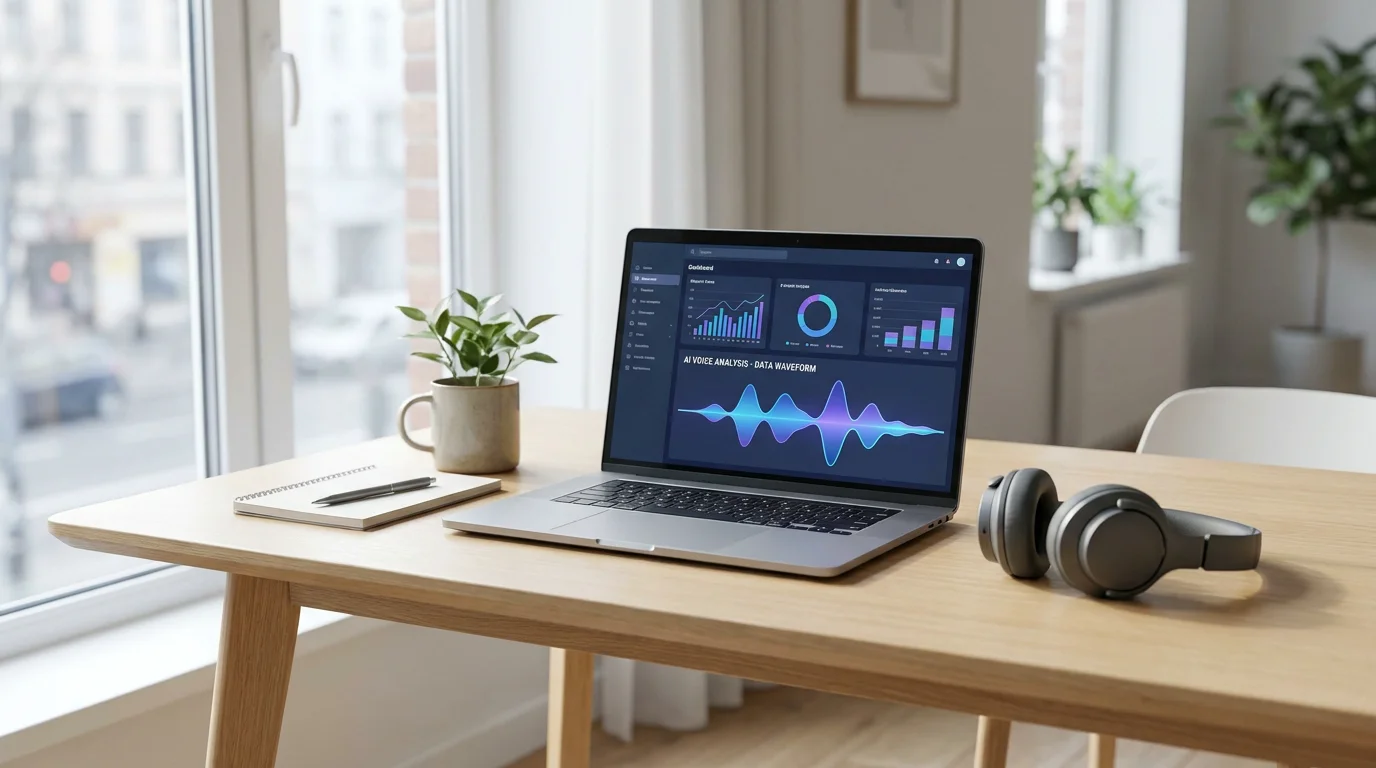
In practice, AI enhances the contact center at every layer. At the self-service layer, intelligent virtual agents handle routine inquiries, appointment scheduling, and FAQ responses without human intervention. At the agent-assist layer, real-time transcription, sentiment detection, and knowledge-base suggestions help representatives resolve issues faster. At the management layer, predictive analytics and automated quality assurance give supervisors actionable insights across every conversation.
This is precisely why we built an AI Voice Agent into our cloud-based contact center solutions. It provides 24/7 call coverage, answers common questions, and schedules appointments automatically, ensuring that no call goes unanswered, even outside business hours.
Selecting the Right Platform: A Practical Framework
With dozens of providers competing for attention, a structured evaluation process prevents costly missteps. Consider the following criteria in order of priority.
- Assess your channel requirements. Identify which communication channels your customers use most. If your organization handles high call volumes alongside growing chat and email traffic, you need a truly omnichannel solution, not a voice-only tool.
- Evaluate total cost of ownership. Look beyond the monthly subscription. Factor in setup fees, integration costs, training time, and long-term scalability. Cloud solutions typically offer lower total cost because maintenance, upgrades, and infrastructure management are included.
- Verify compliance and security. For healthcare, legal, and financial services organizations, regulatory compliance is critical. Ensure the platform offers bank-grade encryption, HIPAA compatibility, and data residency options aligned with US regulations.
- Test integration depth. Confirm that the platform connects with your existing CRM, EHR, or practice management system through pre-built connectors or open APIs. Shallow integrations create data silos that undermine the entire purpose of a unified platform.
- Demand reliability guarantees. Uptime commitments matter. A 99.9% uptime guarantee, backed by service-level agreements, protects your business from revenue-damaging outages.
Our cloud contact center services are designed to meet each of these criteria, with enterprise-grade security, no hardware requirements, and deployment in days rather than months.
Comparing Leading Cloud Contact Center Providers
The table below offers a high-level comparison of notable platforms available in 2026. Provider capabilities vary, and the right choice depends on your organization’s size, industry, and specific requirements.
| Provider | Starting Price | AI Capabilities | Key Strength |
|---|---|---|---|
| Cloud Vision Technologies | $16.99/user/month | AI Voice Agent (24/7), automation, analytics | Integrated VoIP, AI, and contact center from one provider; fast deployment; no hardware |
| Nextiva | $75/agent/month | AI-powered routing, workflow automation | All-in-one CRM and communication suite |
| Five9 | Custom pricing | Intelligent virtual agents, sentiment analysis | Workforce management and analytics |
| Genesys | Custom pricing | Predictive routing, AI copilot | Experience orchestration for large enterprises |
| RingCentral | Custom pricing | AI receptionist, conversation analysis | Unified communications and contact center |
As the table illustrates, many established providers target enterprise buyers with complex pricing. For small to mid-sized businesses (and enterprises seeking cost efficiency), a platform that bundles VoIP, AI, and contact center tools at a transparent per-user rate delivers significant value.
Industry-Specific Applications Worth Considering
The versatility of cloud-hosted contact centers extends well beyond generic customer support. Several verticals are seeing particularly strong returns.
Healthcare and dental practices benefit from HIPAA-compliant call handling, automated appointment reminders, and AI-driven triage that routes urgent calls to on-call staff. US hospitals are deploying HIPAA-compliant voice biometrics, while financial institutions layer real-time fraud analytics onto cloud platforms, according to Fortune Business Insights.
Legal and professional services firms rely on after-hours call capture, client intake automation, and secure call recording for compliance documentation. An AI Voice Agent ensures no prospective client call is missed, even during evenings and weekends.
Sales organizations and e-commerce teams leverage outbound dialing, campaign management, and real-time coaching to improve conversion rates. Integrated analytics reveal which scripts, agents, and channels deliver the strongest results.
Real estate businesses use cloud platforms to manage high volumes of inbound inquiries across listings while providing immediate, personalized responses through automated call distribution and intelligent routing.
Taking the Next Step Toward Modern Customer Experience
The data is clear: cloud-based contact center platforms are not a future consideration but a present-day imperative. With the market projected to nearly double by 2030 and AI-driven automation reshaping every customer interaction, organizations that delay migration risk falling behind competitors who have already made the shift.
The most impactful decision you can make is choosing a platform that combines reliability, affordability, and intelligent automation in a single, unified solution. With a 99.9% uptime guarantee, bank-grade encryption, and three integrated products from one provider, we deliver enterprise-grade communications without the enterprise-grade complexity.
To see how it works for your team, book a free demo of our cloud-based contact center platforms and experience the difference firsthand.
Frequently Asked Questions
What is the difference between a cloud call center and a cloud contact center?
A cloud call center focuses primarily on voice interactions, while a cloud contact center supports multiple channels, including voice, email, chat, SMS, and social media. Contact centers also offer deeper analytics, AI features, and CRM integrations for a more complete customer experience.
How much does cloud contact center software typically cost?
Pricing varies widely by provider and feature set. Some platforms charge $75 or more per agent per month, while solutions like ours start at $16.99 per user per month, making enterprise-grade tools accessible to businesses of all sizes.
Can a small business benefit from a cloud contact center?
Absolutely. Cloud platforms eliminate the need for expensive hardware and dedicated IT staff. Pay-per-seat licensing, rapid deployment, and built-in AI tools allow small and mid-sized businesses to deliver the same level of service as much larger organizations.