Summary: The best call center software for small businesses combines cloud deployment, AI automation, and omnichannel support, with the market projected to reach $77.82 billion in 2026.
Small businesses across the United States face mounting pressure to deliver exceptional customer service with limited staff and tight budgets. The global contact center software market is projected to grow from $77.82 billion in 2026 to $263.75 billion by 2034, a trajectory that reflects how critical these tools have become for organizations of every size. Whether you run a healthcare practice, a legal office, or a retail operation, finding the best call center software for a small business is no longer optional; it is a strategic imperative. Our best call center software guide covers the broader landscape, but this article narrows the lens to what small and mid-sized teams truly need.
Small and mid-sized enterprises are adopting contact center software at the fastest clip, exploiting pay-per-seat pricing to access features once restricted to multimillion-dollar on-premise suites. The question is not whether you need a modern phone system; it is which platform will deliver the greatest value without overwhelming your team. Below, you will find a thorough breakdown of features, pricing considerations, and evaluation criteria designed to help you make a confident decision.
Why Small Businesses Need Dedicated Call Center Software

Customer expectations have never been higher. According to McKinsey, phone support remains the preferred channel across all generations, with baby boomers at 94% and even Gen Z still at 71%. For a small business, every missed call represents a lost appointment, a lost sale, or a damaged relationship. Legacy phone systems simply cannot keep pace with these demands.
The SME segment is expected to grow at the fastest CAGR of 22.11% from 2025 to 2032, as small and medium enterprises increasingly adopt cloud-based contact center solutions for their cost-efficiency, scalability, and ease of implementation. This surge is driven by the elimination of expensive hardware, the flexibility of remote work, and the ability to add or remove seats on demand.
A dedicated contact center platform also provides real-time dashboards, call recording, and performance analytics that turn raw conversations into actionable insights. Without these tools, managers operate in the dark, unable to coach agents, identify bottlenecks, or measure customer satisfaction.
Essential Features to Look for in 2026
Not every feature matters equally when you are managing a lean team. Prioritizing the right capabilities will ensure you get maximum value without paying for complexity you do not need.
Cloud-Based Deployment
Cloud deployments have become the default choice, with enterprises favoring consumption-based CCaaS subscriptions that trim deployment cycles to weeks and eliminate capital expenditure. For small businesses, a cloud architecture means no server rooms, no hardware purchases, and the freedom to operate from any location. Our cloud call center software is built on this exact principle, allowing teams to go live in days rather than months.
AI-Powered Automation
Over 92% of companies are investing in AI-driven personalization to support customer service. AI features such as intelligent call routing, real-time transcription, sentiment analysis, and automated call summaries allow small teams to handle higher volumes without adding headcount. An AI voice agent can answer calls around the clock, schedule appointments, and resolve frequently asked questions, ensuring that no inquiry goes unanswered.
Omnichannel Support
Customers reach out through phone, email, live chat, SMS, and social media. The omnichannel call center solutions market was valued at about $24.5 billion in 2024 and is projected to grow to approximately $45.8 billion by 2032, reflecting increasing adoption of unified platforms that let customers interact seamlessly across channels. A platform that consolidates these channels into a single dashboard eliminates the confusion of juggling separate tools.
Real-Time Analytics and Reporting
Knowing your average handle time, first-contact resolution rate, and missed-call percentage in real time empowers better decisions. Performance dashboards help managers spot coaching opportunities and staffing gaps before they erode service quality.
CRM and Business Tool Integrations
Your call center software should flow into the tools your team already uses. Whether it is a healthcare EHR, a legal case management system, or an e-commerce CRM, seamless integration ensures that every customer interaction is logged and accessible.
How AI Is Reshaping Call Centers for Small Teams
The global call center AI market was valued at approximately $3.98 billion in 2025 and is projected to reach $4.89 billion by 2026. This rapid investment cycle underscores how central artificial intelligence has become to the contact center experience.
Contact centers using AI see a 14% increase in issues resolved per hour and a 9% reduction in average handling time, according to industry research compiled by Giva. For a five-person support team, those gains translate directly into shorter queues and happier customers.
Even with rapid AI advances, 90% of customer interactions still require human agents in 2026, according to Gartner projections. The most effective approach is a hybrid model in which AI handles routine tasks (appointment reminders, order status checks, FAQ responses) and human agents focus on complex, relationship-driven conversations. We designed our Intelligent Voice AI Agent with exactly this balance in mind, providing 24/7 coverage without sacrificing the human touch.
Comparing Pricing Models: What Small Businesses Should Expect
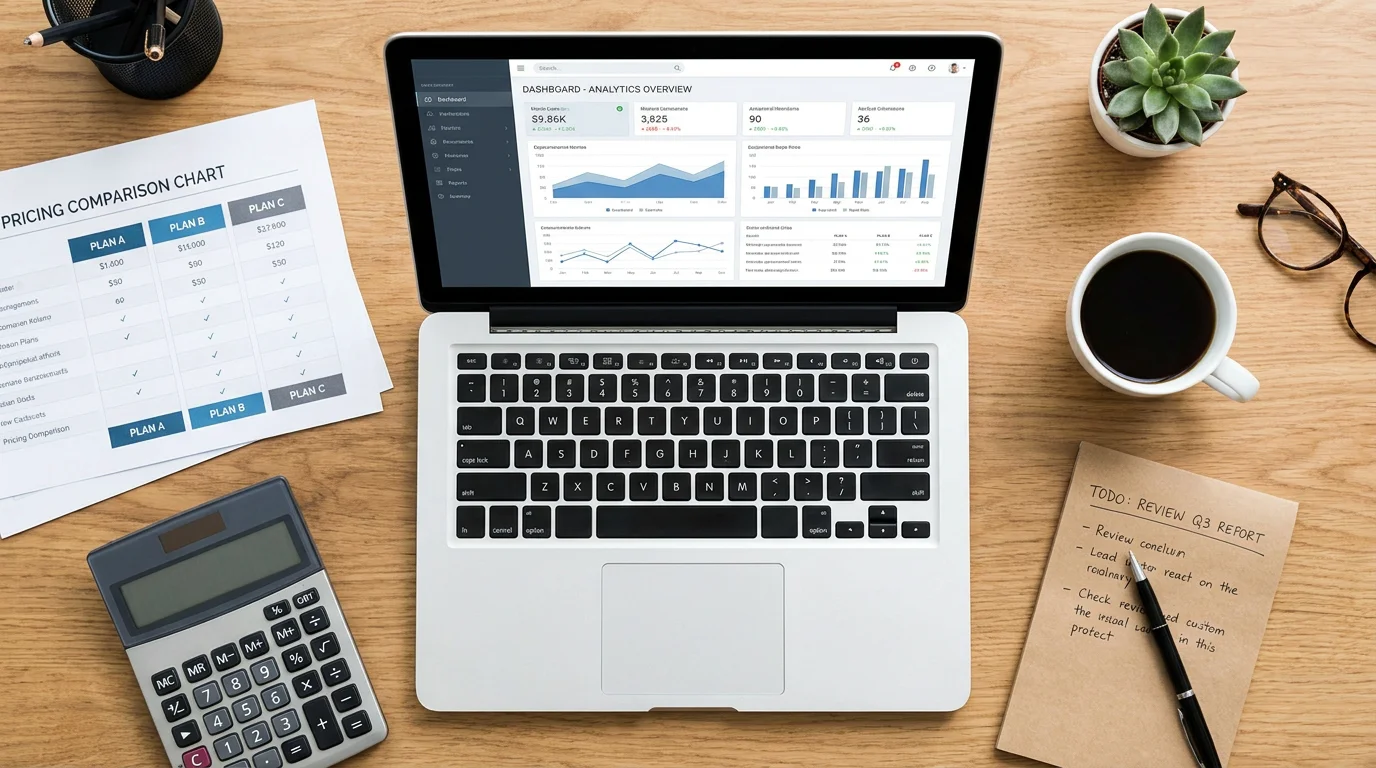
Pricing structures vary widely across the market. Understanding the common models will help you avoid unexpected costs and choose a plan that fits your growth trajectory.
- Per-user, per-month subscriptions: The most common model for cloud platforms. Prices typically range from $15 to $120 per user per month depending on the feature tier.
- Tiered plans: Vendors offer escalating feature sets (basic, professional, enterprise) so you pay only for what you need today and upgrade as you grow.
- Usage-based pricing: Some platforms charge by the minute or by the number of interactions, which can benefit teams with low or seasonal call volumes.
- Free or freemium tiers: A handful of providers offer limited free plans, but these rarely include the analytics, AI, or integration depth that growing businesses require.
When evaluating cost, look beyond the sticker price. Factor in hardware requirements, implementation fees, and per-feature add-on charges. A platform that starts at $16.99 per user per month with no hardware required (like ours) can offer dramatically lower total cost of ownership than a nominally cheaper option that demands on-site equipment and professional services.
Top Call Center Software Options for Small Businesses
The table below provides a side-by-side comparison of notable platforms in the market. As you review these options, consider how each one aligns with your industry, team size, and budget.
| Platform | Starting Price (per user/month) | Cloud-Based | AI Features | Omnichannel | Hardware Required |
|---|---|---|---|---|---|
| Cloud Vision Technologies | $16.99 | Yes | AI Voice Agent, smart routing, analytics | Yes | No |
| Aircall | $30 | Yes | Transcription, summaries (add-on) | Limited | No |
| Dialpad Support | $80 | Yes | Built-in AI, live coaching | Yes | No |
| Genesys Cloud CX | $75 | Yes | Advanced AI, IVR | Yes | No |
| LiveAgent | $15 | Yes | Basic automation | Yes | No |
| Freshcaller | $0 (limited free tier) | Yes | Basic IVR | Limited | No |
Cloud Vision Technologies stands out for combining hosted VoIP, an AI Voice Agent, and full contact center capabilities from a single provider, all at a starting price that is a fraction of what many competitors charge. If your team needs robust inbound call center software with enterprise-grade security and 99.9% uptime, it is worth requesting a demo to see how the platform fits your workflow.
Industry-Specific Considerations for US Small Businesses
Different industries face unique communication challenges. A dental practice juggling appointment confirmations has very different needs from a financial services firm managing compliance-sensitive calls. Here is how to think about your choice by vertical.
Healthcare and Dental Practices
Healthcare led with a 17.79% CAGR outlook between 2026 and 2031, reflecting the rapid uptake of HIPAA-compliant voice biometrics and real-time translation features. Medical and dental offices require HIPAA-compliant communication, automated appointment scheduling, and after-hours call handling. An AI voice agent that can confirm, reschedule, or cancel appointments without human intervention significantly reduces front-desk workload.
Legal and Professional Services
Law firms cannot afford to miss a prospective client call. Call recording, detailed interaction logs, and secure data handling are non-negotiable. A platform with bank-grade encryption and automatic call logging streamlines compliance and client intake.
Retail and E-Commerce
Customer service-oriented sectors, such as consumer goods and retail, are increasingly investing in contact centers to improve the customer experience and ensure service satisfaction. Seasonal volume spikes demand a system that scales up instantly and dials back when demand subsides, making cloud VoIP for small business an ideal fit.
Common Pitfalls to Avoid When Choosing Call Center Software
Selecting the wrong platform can cost more than money; it can cost customers. Here are the most frequent mistakes small business owners make.
- Overbuying features: Enterprise-grade workforce management modules are unnecessary for a ten-person team. Focus on the capabilities you will use in the next 12 months.
- Ignoring integration requirements: If the platform does not connect to your CRM, ticketing system, or scheduling tool, your team will waste time on manual data entry.
- Underestimating onboarding time: Solutions that require weeks of IT configuration will stall your operations. Prioritize platforms that deploy in days.
- Overlooking scalability: A platform that works for five agents but buckles at twenty will force a costly migration. Choose a solution designed to grow with you.
- Neglecting security and compliance: Data security issues are cited by 35% of businesses as a key challenge in call center software adoption, according to Fortune Business Insights. Verify that any provider you evaluate offers encryption, role-based access, and relevant compliance certifications.
How to Evaluate and Select the Right Platform
A structured evaluation process will save you from buyer remorse. Follow these steps to narrow your shortlist efficiently.
- Define your requirements. List your must-have features (AI routing, CRM integration, HIPAA compliance) and your nice-to-have features (video conferencing, social media channels).
- Set a realistic budget. Include per-user fees, implementation costs, and any anticipated add-on charges.
- Request demos. Live demonstrations reveal usability issues that marketing pages conceal. Pay attention to how quickly you can set up a call queue or pull a report.
- Test with a pilot team. If a provider offers a free trial or a limited rollout, use it. Real-world performance matters more than spec sheets.
- Check references and reviews. Look for testimonials from businesses in your industry and of a similar size. Verified reviews on platforms like G2 or Capterra add a layer of credibility.
- Confirm support and SLAs. SMEs recorded the steepest growth trajectory, with a 19.32% CAGR through 2031, according to Mordor Intelligence, which means vendors are actively competing for your business. Leverage that competition by demanding dedicated support and uptime guarantees.
When you are ready to explore how a single platform can unify your VoIP, AI voice agent, and contact center needs, a guided demo is the most efficient next step. Review the various call center software companies in the market, and compare their real-world performance against your requirements list.
Selecting the best call center software for your small business ultimately comes down to matching your operational reality with a platform that is both powerful and practical. The market is projected to grow from $77.82 billion in 2026 to $263.75 billion by 2034, and the vendors competing for your business are delivering more value at lower price points than ever before. The right choice will reduce missed calls, improve customer satisfaction, and free your team to focus on revenue-generating work. With enterprise-grade security, 24/7 AI voice coverage, and deployment that takes days rather than months, our platform is built to give small businesses every advantage. Book a free demo of our Cloud Contact Center Software and see firsthand how it fits your workflow.
Frequently Asked Questions
What is the average cost of call center software for a small business?
Pricing typically ranges from $15 to $120 per user per month, depending on the feature tier and provider. Cloud Vision Technologies offers plans starting at $16.99 per user per month with no hardware costs, making it one of the most accessible options for small and mid-sized teams in the US.
Can a small business run a call center without dedicated IT staff?
Yes. Cloud-based platforms eliminate the need for on-premise servers, complex configurations, and in-house IT teams. Most modern solutions allow you to set up call queues, routing rules, and analytics dashboards through an intuitive web interface, with deployment possible in just a few days.
How does AI improve call center performance for small teams?
AI handles repetitive tasks such as call routing, appointment scheduling, and FAQ responses, freeing human agents to focus on complex interactions. Features like real-time transcription, sentiment analysis, and automated summaries help managers coach more effectively and maintain consistent service quality even with limited staff.