Summary: The global contact center software market is projected to reach $77.82 billion in 2026, driven by AI automation and cloud adoption. Here is what to look for in leading providers.
Every missed call is a missed opportunity, and the stakes are higher than ever. Gartner predicts that conversational AI will reduce contact center agent labor costs by $80 billion in 2026, signaling a fundamental shift in how businesses handle customer interactions. For organizations that still rely on legacy phone systems, the pressure to modernize is mounting. The right call center software company can mean the difference between losing callers and converting them into loyal customers. If you are evaluating your options, our best call center software guide is a useful starting point.
Choosing among the many call center software companies on the market requires clarity about your business needs, budget constraints, and growth trajectory. This article breaks down the key categories, features, and market dynamics shaping the industry in 2026, so you can make an informed decision that aligns with your operational goals.
Why the Call Center Software Market Is Surging
The global contact center software market was valued at $63.88 billion in 2025 and is projected to grow to $77.82 billion in 2026, reaching $263.75 billion by 2034 at a CAGR of 16.50%, according to Fortune Business Insights. These numbers reflect a market that is not just growing but accelerating, fueled by enterprise demand for smarter communication tools.
Several forces are driving this expansion. Growth is fueled by rising enterprise adoption of cloud-based communication platforms, automation tools, and omnichannel engagement strategies. Nearly 39% of enterprises globally have migrated from traditional call handling systems to cloud-based solutions, while 32% have implemented AI-powered call analytics and virtual agents for operational efficiency. For US businesses in particular, this shift is reshaping how customer service teams operate across healthcare, financial services, legal practices, and retail.

The global CCaaS (Contact Center as a Service) market is projected to grow from $8.33 billion in 2026 to $30.15 billion by 2034, exhibiting a CAGR of 17.40%, according to Fortune Business Insights’ CCaaS report. This cloud-first trajectory confirms that subscription-based, hardware-free models are becoming the standard for companies of all sizes.
Types of Call Center Software Solutions
Not every organization needs the same type of platform. Understanding the core categories helps narrow your search and ensures you invest in the right architecture for your team.
Cloud-Based Contact Centers
Cloud-based platforms host all infrastructure on remote servers, eliminating the need for on-site hardware. They offer low upfront costs, rapid scalability, and automatic updates. According to a study by RingCentral, shifting to cloud-based solutions can help improve customer call answer rates by around 5% while reducing the average speed of answer by as much as 50%. For teams seeking flexibility, our cloud call center software delivers enterprise-grade reliability without hardware dependencies.
On-Premises Call Centers
Traditional on-premises systems provide full data control and can be cost-effective at scale when licensing is unlimited. However, they require significant upfront investment and dedicated IT staff. The on-premises deployment segment is expected to account for 53.55% of the total market share in 2026, though it is likely to experience declining growth over the forecast period as cloud solutions gain ground.
Inbound and Outbound Platforms
Inbound call center software manages incoming customer calls with features such as IVR systems, automatic call distribution, callback scheduling, and queue management. Outbound platforms focus on agent-initiated calls, pulling lead data and integrating with CRMs for sales campaigns. Many modern solutions combine both capabilities in a single platform. If you primarily handle incoming customer inquiries, our inbound call center software is purpose-built for that workflow.
Key Features That Define Leading Providers
The feature set of a call center platform directly impacts agent productivity, customer satisfaction, and operational cost. Here are the capabilities that separate strong providers from the rest.
AI-powered automation is now a baseline expectation. 88% of contact centers report using some form of AI, but only 25% have fully integrated it into daily operations. The most effective platforms use AI for intelligent call routing, real-time sentiment analysis, automated note-taking, and virtual voice agents that handle routine inquiries around the clock.
Omnichannel routing connects voice, chat, email, SMS, and social media into a unified workflow. Skill-based routing directs callers to the agent best equipped to resolve their specific issue, reducing transfers and shortening resolution times.
Real-time analytics and reporting give supervisors visibility into call volume, agent performance, average handle time, and customer satisfaction scores. First contact resolution rate averages 70% industry-wide, and platforms with strong dashboards help teams push that number higher.
CRM integration ensures agents have full customer context before they answer a call. When purchase history, previous interactions, and account details are available instantly, conversations become more efficient and more personal.
Workforce engagement management covers scheduling, quality monitoring, coaching tools, and gamification. For high-volume teams, these features reduce agent burnout and keep turnover in check. Annual agent turnover runs at 30% to 45%, with some centers reaching 60%, according to Giva’s 2026 call center statistics report, making retention tools critically important.
How AI Is Reshaping the Industry in 2026
Artificial intelligence is no longer a futuristic add-on; it is the engine behind the most significant operational improvements in call center technology this year.
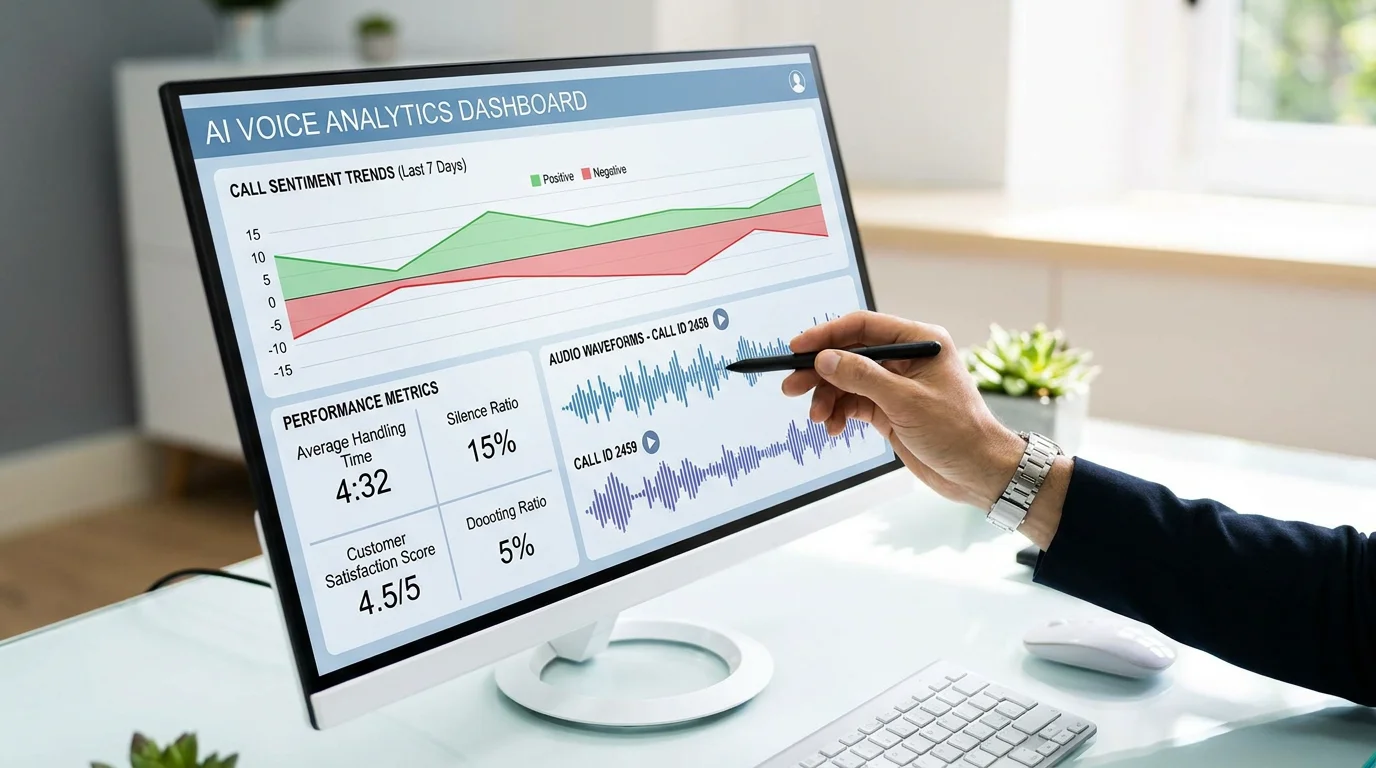
The global call center AI market was valued at approximately $3.98 billion in 2025 and is projected to reach $4.89 billion by 2026. North America generated more than 42% of total global revenue in 2025, making the US the largest regional market for AI-powered call center solutions.
Virtual voice agents now handle tier-1 inquiries such as appointment scheduling, order tracking, and FAQ responses without human intervention. Voice AI costs roughly $0.40 per call compared to $7 to $12 for a human agent, representing a dramatic reduction in per-interaction costs. For organizations that need 24/7 coverage without staffing night shifts, our automated call center software provides AI-driven call handling at a fraction of traditional labor costs.
Speech analytics is another rapidly growing category. The global speech analytics market is growing at an estimated 15.6% CAGR from 2025 to 2030 and is projected to surpass $7.4 billion by 2030. These tools automate call review, identify coaching opportunities, and surface compliance risks that would otherwise go undetected.
Despite these advances, the human element remains essential. Even with rapid AI advances, 90% of customer interactions still require human agents in 2026, according to Gartner projections. The most effective strategy is not replacing agents but equipping them with AI tools that handle repetitive tasks so they can focus on complex, high-value conversations.
Comparing the Top Call Center Software Providers
The following table provides a side-by-side comparison of well-known providers in the market. Pricing, deployment models, and target audiences vary widely, so matching these factors to your specific requirements is essential.
| Provider | Deployment | AI Capabilities | Best For | Starting Price |
|---|---|---|---|---|
| Cloud Vision Technologies | Cloud | AI Voice Agent, real-time analytics, automated FAQ handling | SMB to Enterprise (healthcare, legal, sales, retail) | $16.99/user/month |
| Five9 | Cloud | Virtual agents, predictive dialing | Sales-focused teams | Contact for pricing |
| NICE CXone | Cloud | Omnichannel AI, workforce optimization | Large enterprises | Contact for pricing |
| Genesys Cloud CX | Cloud | Journey orchestration, AI routing | Complex enterprise environments | Contact for pricing |
| Amazon Connect | Cloud (AWS) | AWS AI integrations | Organizations with internal dev teams | Pay-as-you-go |
| 8×8 | Cloud | AI analytics, workforce engagement | Mid-sized organizations | Contact for pricing |
Cloud Vision Technologies stands apart by combining three integrated products (Hosted VoIP, an AI Voice Agent, and Cloud Contact Center Software) from a single provider, starting at $16.99 per user per month. This bundled approach eliminates the fragmentation that often results from stitching together separate vendors for telephony, automation, and analytics.
What to Look for When Choosing a Provider
Selecting the right platform goes beyond feature checklists. The following criteria help ensure your investment delivers measurable returns.
Deployment speed matters more than many buyers realize. Legacy systems can take months to implement. Cloud-native platforms that deploy in days minimize disruption and accelerate time to value. Ask providers about their average onboarding timeline and whether dedicated support is included.
Total cost of ownership should account for hardware, licensing, training, maintenance, and scaling costs. Around 35% of small and medium-sized enterprises report financial strain in adopting advanced software solutions due to complex infrastructure requirements. Hardware-free platforms eliminate a significant portion of that burden.
Security and compliance are non-negotiable, particularly for healthcare, financial services, and legal teams. Look for bank-grade encryption, uptime guarantees, and adherence to industry-specific regulations. A 99.9% uptime guarantee, for instance, translates to less than nine hours of downtime per year.
Integration ecosystem determines how well the platform fits into your existing technology stack. About 31% of call centers struggle with software interoperability between legacy and digital systems. Prioritize providers that offer native CRM integrations and open APIs.
Scalability ensures the platform can grow with your organization. Whether you are adding ten agents or expanding to new locations, the software should accommodate growth without requiring a complete re-implementation.
Industry-Specific Use Cases Across the US Market
Different industries place different demands on their call center software. Here is how leading verticals are leveraging these platforms in 2026.
Healthcare and dental practices use AI voice agents to schedule appointments, handle prescription refill requests, and manage patient inquiries outside business hours. Compliance with HIPAA and other regulations makes security features paramount.
Legal and professional services firms rely on call routing and voicemail management to ensure no client inquiry goes unanswered. Automated call summaries help attorneys and paralegals review interactions without listening to full recordings.
Financial services teams need robust analytics, call recording for regulatory compliance, and CRM integration to maintain a complete view of each client relationship.
Retail and e-commerce businesses benefit from high-volume call handling, AI-driven self-service for order tracking and returns, and omnichannel engagement that connects phone, chat, and email interactions.
Sales organizations prioritize outbound dialing, lead management integrations, and real-time coaching tools that help representatives close more deals. Predictive analytics can identify the optimal times and sequences for outbound campaigns.
Common Challenges and How to Overcome Them
Approximately 39% of call centers report a shortage of trained personnel capable of handling AI and automation tools. This skills gap underscores the importance of choosing a provider that offers comprehensive onboarding, training resources, and dedicated support rather than leaving your team to figure out a complex platform on their own.
Nearly 28% of organizations face data security risks in cloud-based platforms, particularly when handling customer-sensitive information. Mitigating this risk requires providers with enterprise-grade security, encrypted data transmission, and compliance certifications relevant to your industry.
Migration from legacy systems can also create temporary productivity dips. Around 27% of firms experience productivity delays during system migration and integration phases. Choosing a platform with fast deployment capabilities and a dedicated migration support team significantly reduces this transition period.
Conclusion
The call center software landscape in 2026 is defined by cloud-first architectures, AI-driven automation, and a relentless focus on customer experience. With the global market projected to reach $77.82 billion this year and AI reshaping how every interaction is handled, the window for operating on outdated systems is closing rapidly. Organizations across the US, from healthcare practices to high-volume sales teams, are investing in platforms that reduce costs, improve agent performance, and deliver 24/7 coverage.
The most impactful choice you can make is selecting a provider that combines telephony, AI automation, and contact center capabilities in a single, integrated platform, eliminating the complexity and cost of managing multiple vendors. We deliver exactly that: three integrated products, zero hardware requirements, bank-grade security, and deployment in days rather than months.
To see how it works for your team, explore our cloud contact center solutions and book a free demo.
Frequently Asked Questions
What is the difference between call center software and contact center software?
Call center software traditionally focuses on voice-based interactions, while contact center software encompasses multiple channels including chat, email, SMS, and social media. In 2026, most leading providers (including Cloud Vision Technologies) offer omnichannel capabilities that blur this distinction, so you get unified management of all customer communications.
How much does call center software cost for a small business?
Pricing varies widely depending on features, user count, and deployment model. Cloud-based platforms typically start between $15 and $40 per user per month. We offer plans starting at $16.99 per user per month with no hardware costs, making it accessible for SMBs that need enterprise-grade features without enterprise-level budgets.
Can AI fully replace human call center agents?
Not in 2026. AI handles routine, repetitive inquiries effectively, but 90% of customer interactions still require human agents for complex problem-solving, empathy-driven conversations, and nuanced decision-making. The best approach is using AI to augment your team, not replace it.