Summary: Cloud call center software is a hosted platform that manages customer interactions across channels; the global market is projected to reach $22.88 billion in 2026, growing at a 15.7% CAGR.
According to Fortune Business Insights, the broader contact center software market is projected to grow from $77.82 billion in 2026 to $263.75 billion by 2034. That trajectory signals an unmistakable shift: businesses across the United States are replacing legacy phone systems with cloud call center software that unifies voice, digital channels, and artificial intelligence in a single platform. For organizations that depend on high-volume customer communication, understanding this category is no longer optional. It is a competitive necessity. If you are evaluating solutions for your team, our cloud contact center software is a strong starting point.
Whether you operate a healthcare practice fielding patient inquiries, a legal firm managing client intake, or a sales organization driving outbound campaigns, the right platform can measurably reduce operating costs while improving customer satisfaction. This guide covers what cloud call center solutions are, the features that matter most, how AI is reshaping the landscape, and what to look for when choosing the platform that fits your needs.
What Is Cloud Call Center Software and How Does It Work?
Cloud call center software is a hosted communication platform that enables businesses to manage inbound and outbound customer interactions over the internet rather than through on-premises hardware. Agents access the system from a desktop application, mobile device, or web browser, while the provider maintains servers, security patches, and feature updates remotely.
Unlike traditional on-premises setups that require physical PBX hardware, dedicated server rooms, and on-site IT staff, a cloud solution operates on a subscription model. Adding a new agent is as simple as assigning a login and a phone number. Removing a seat is equally straightforward, which makes this model especially attractive for organizations that experience seasonal call volume fluctuations.
Cloud contact center software is a cloud-based platform that manages customer interactions across multiple channels, including phone, email, chat, and social media. It offers features such as call routing, interactive voice response (IVR), CRM integration, and analytics. These capabilities allow businesses of every size to deliver efficient, personalized service without maintaining expensive infrastructure.
Why Businesses Are Migrating to the Cloud
The shift toward cloud-based contact center platforms is accelerating, driven by measurable economic and operational advantages. The cloud contact center software market is projected to grow from $19.78 billion in 2025 to $22.88 billion in 2026 at a CAGR of 15.7%, according to a 2026 report from The Business Research Company. Several factors explain this momentum.
Lower capital expenditure. Traditional systems demand significant upfront investment in hardware, telephony infrastructure, and installation. Cloud platforms eliminate those costs entirely. You pay a predictable monthly fee per agent instead of absorbing a six-figure capital outlay.
Rapid deployment. On-premises installations can take months to plan and execute. Cloud solutions can be operational within days. For growing teams and new office locations, this speed is a decisive advantage.
Remote workforce enablement. With agents able to log in from any internet-connected device, cloud platforms are purpose-built for hybrid and remote work models. This flexibility also expands your talent pool beyond a single geographic area.
Continuous innovation. Cloud service providers are focusing on AI-driven automation, omnichannel communication capabilities, advanced analytics, workforce optimization tools, and seamless integration with CRM and enterprise platforms. Because updates are delivered automatically, your team always works with the latest capabilities.
For US businesses looking for a solution that deploys in days with no hardware requirements, we built our cloud-based contact center software to address exactly these priorities.
Essential Features to Look For
Not every cloud platform delivers the same value. The features below represent the capabilities that separate a useful tool from a transformative one.
Interactive Voice Response (IVR). IVR menus allow callers to self-serve by navigating options via touch-tone or speech. A well-designed IVR reduces agent workload by resolving simple inquiries automatically, such as account balance checks or appointment confirmations.
Automatic Call Distribution (ACD). ACD routes incoming calls to the right agent or department based on predefined rules. Options include skills-based routing, longest-idle routing, and round-robin distribution. Intelligent routing reduces hold times and improves first-contact resolution.
Omnichannel support. Modern customers expect to reach you through voice, email, SMS, live chat, and social media. A true omnichannel platform unifies these channels so agents see the full conversation history regardless of where the interaction started.
Real-time analytics and reporting. Dashboards that display live call volume, average handle time, queue depth, and agent status enable supervisors to make informed staffing decisions on the fly. Historical reports reveal long-term trends for strategic planning.
Call monitoring and coaching. Supervisors need the ability to listen to live calls, whisper guidance to agents, or barge into a conversation when necessary. These capabilities are critical for training new hires and maintaining quality standards.
CRM integration. Connecting your call center platform to your CRM gives agents instant access to caller history, account details, and previous interactions. This context enables personalized conversations and eliminates the need for customers to repeat information.
How AI Is Transforming Cloud Contact Centers
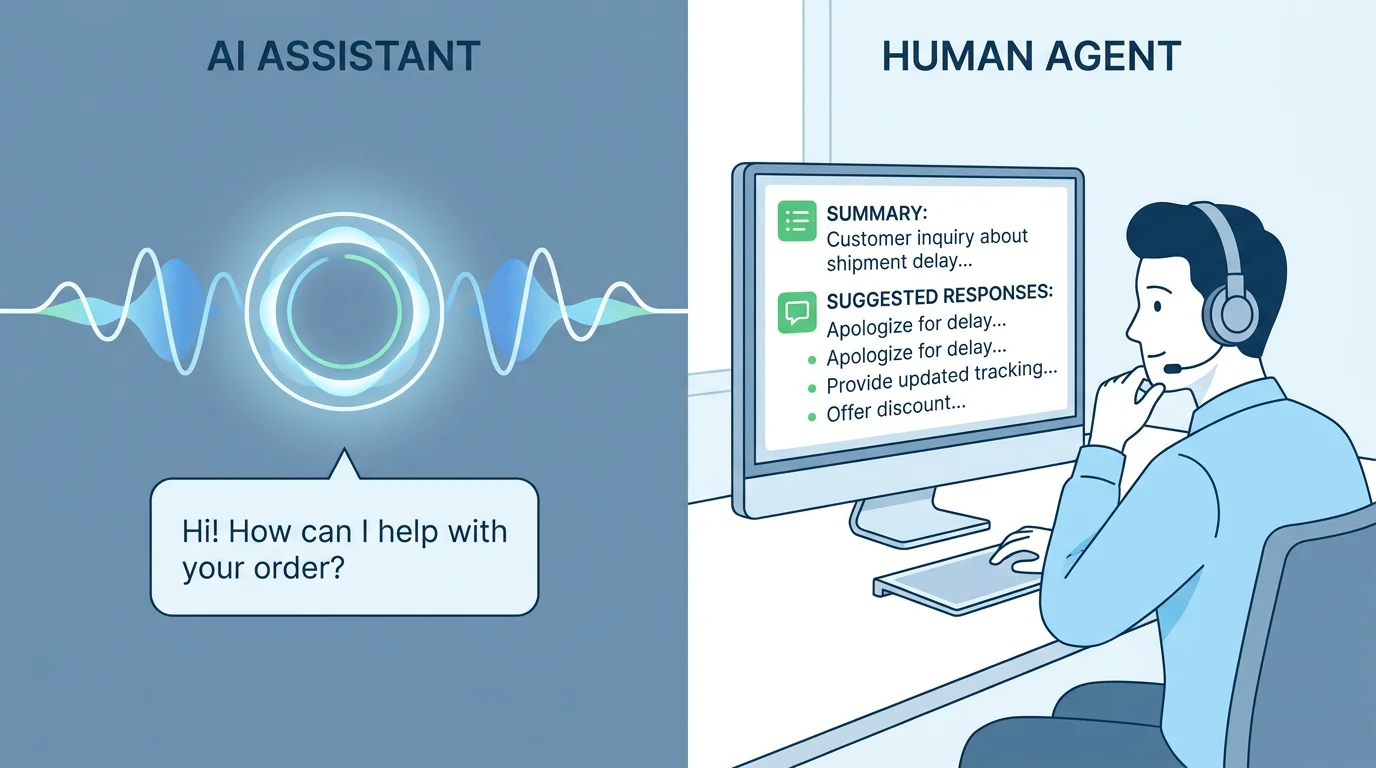
Artificial intelligence is no longer a future promise for call centers; it is a present-day operational advantage. Gartner predicts conversational AI will reduce contact center agent labor costs by $80 billion in 2026. That projection reflects how quickly AI-powered automation is reshaping the economics of customer support.
Gartner also projects that 10% of all agent interactions will be fully automated by 2026, up from just 1.6% previously. The most common applications include intelligent call routing, automated call summaries, sentiment analysis, and virtual agents that handle tier-one inquiries such as order tracking, appointment scheduling, and FAQ responses.
While 88% of contact centers report using some form of AI, only 25% have fully integrated it into daily operations. This gap represents a significant opportunity. Organizations that move beyond partial adoption toward comprehensive AI integration stand to gain a measurable edge in efficiency and customer satisfaction.
Our automated call center software leverages AI to answer calls around the clock, schedule appointments, and handle common questions, helping your team recapture hours previously lost to repetitive tasks.
Cloud Call Center Software for Key Industries
While cloud platforms serve virtually every sector, certain industries derive outsized value from specific capabilities.
Healthcare and dental practices. HIPAA-compliant voice biometrics and real-time translation tools reduce verification friction and enhance multilingual support, driving strong growth in the healthcare contact center segment, with a projected 17.79% CAGR between 2026 and 2031. For medical and dental offices, the ability to automate appointment reminders, handle after-hours calls with an AI voice agent, and maintain regulatory compliance is indispensable.
Legal and professional services. Client intake calls often involve sensitive information. Encryption, call recording with consent workflows, and skills-based routing that connects callers to the appropriate practice area ensure both efficiency and confidentiality.
Financial services. Real-time fraud analytics, identity verification, and secure payment processing over the phone are non-negotiable requirements. Cloud platforms deliver these capabilities without the complexity of maintaining on-premises security infrastructure.
Sales organizations. Outbound auto-dialers, campaign management tools, and CRM integrations accelerate pipeline velocity. Supervisors can monitor live calls and coach representatives in real time, directly improving conversion rates.
Comparing Leading Solutions in 2026
Selecting the right platform requires evaluating features, pricing, deployment complexity, and support quality. The table below offers a high-level comparison of several prominent options alongside our own offering.
| Provider | Starting Price (per user/month) | AI Features | Deployment Speed | Hardware Required |
|---|---|---|---|---|
| Cloud Vision Technologies | $16.99 | AI Voice Agent, 24/7 coverage | Days | None |
| Nextiva | $75 | AI-powered workflows, chatbots | Weeks | None |
| Five9 | Contact for pricing | IVAs, conversation analytics | Weeks | None |
| RingCentral | $30 (annually) | AI routing, virtual agents | Weeks | None |
| Aircall | $30 (annually) | AI transcription, analytics | Days | None |
Cloud Vision Technologies stands apart with the most accessible entry price, integrated AI voice agent capabilities, and a deployment timeline measured in days rather than weeks. Combined with enterprise-grade security and a 99.9% uptime guarantee, it delivers the value that growing US businesses need without the complexity or cost of legacy alternatives.
How to Choose the Right Cloud Call Center Platform
With dozens of providers competing for your attention, a structured evaluation process prevents costly missteps. Consider these criteria in order of priority.
Define your requirements first. Identify your average call volume, the channels your customers prefer, the integrations you need (CRM, helpdesk, EHR), and whether you require inbound, outbound, or blended functionality. If you are primarily managing incoming inquiries, explore solutions purpose-built for that use case, such as our inbound call center software.
Evaluate total cost of ownership. A low per-seat price means little if the platform charges extra for essential features, requires expensive add-ons, or imposes long-term contracts. Look for transparent, tiered pricing that scales with your team.
Assess security and compliance. US hospitals deploy HIPAA-compliant voice biometrics, and financial institutions layer real-time fraud analytics onto cloud platforms. Regardless of your industry, verify that the provider offers bank-grade encryption, data residency options, and compliance certifications relevant to your sector.
Test the onboarding experience. A platform that takes months to configure negates the agility advantage of the cloud. Prioritize providers that offer guided onboarding, dedicated support, and a deployment timeline measured in days.
Plan for growth. Small and mid-sized enterprises (SMEs) are adopting at the fastest clip, exploiting pay-per-seat pricing to access features once restricted to multimillion-dollar on-premise suites. Ensure the platform you choose can scale from a handful of agents to hundreds without requiring migration to a different product.
The Measurable Impact on Operating Costs
Cost reduction remains one of the most compelling arguments for cloud migration. Industry data indicates a 42% efficiency improvement, 33% operational cost reduction, and 28% enhanced customer retention through AI-based service delivery. These figures, reported by Global Growth Insights in their 2026 call center software market report, underscore the financial case for moving to the cloud.
Beyond direct savings, there are secondary benefits that compound over time. Workforce optimization tools ensure that shifts are staffed appropriately, reducing both overtime and idle time. Automated callbacks eliminate long hold queues, which decreases customer churn. And real-time dashboards give managers the visibility they need to intervene before small issues become expensive problems.
Cloud deployments have become the default choice, with enterprises favoring consumption-based CCaaS subscriptions that trim deployment cycles to weeks and eliminate capital expenditure. For budget-conscious organizations, the shift from capital expense to predictable operating expense is itself a strategic advantage.
Conclusion
The cloud call center software market is expanding at double-digit rates because the technology delivers on its promises: lower costs, faster deployment, stronger customer experiences, and the flexibility to support remote and hybrid teams. With the market projected to grow from $19.78 billion in 2025 to $22.88 billion in 2026 according to Research and Markets, and AI expected to automate an increasing share of routine interactions, now is the time to evaluate whether your current system is keeping pace. The businesses that act decisively will capture the efficiency gains and customer loyalty that define leaders in this space.
We designed our platform to make that transition as seamless as possible, with no hardware, fast deployment, and 24/7 AI voice coverage included from day one. To see how it works for your team, explore our best call center software and book a free demo.
Frequently Asked Questions
What is the difference between a cloud call center and a traditional call center?
A traditional call center relies on on-premises hardware and phone lines, while a cloud call center operates entirely over the internet. Cloud solutions eliminate hardware costs, enable remote work, and receive automatic feature updates from the provider. They are generally faster to deploy and easier to scale.
How much does cloud call center software typically cost?
Pricing varies widely based on features, channels, and provider. Entry-level plans can start as low as $16.99 per user per month, while enterprise-grade platforms with advanced AI and omnichannel capabilities may exceed $75 per user per month. Cloud Vision Technologies offers tiered plans that scale with your business needs, starting at $16.99 per user per month.
Is cloud call center software secure enough for regulated industries?
Reputable providers offer enterprise-grade encryption, HIPAA compliance, PCI DSS certification, and role-based access controls. When evaluating platforms, verify the specific certifications relevant to your industry and confirm that the provider offers data residency within the United States if required.