Summary: Automated call center software uses AI, cloud technology, and intelligent routing to reduce costs and improve customer experience, in a market projected to exceed $77 billion in 2026.
Gartner projects that conversational AI will reduce contact center agent labor costs by $80 billion in 2026. That figure alone signals how rapidly automation is reshaping customer service operations across the US and beyond. For businesses that still rely on manual call handling, every missed call or long hold time translates directly into lost revenue and diminished loyalty. The opportunity cost of inaction is growing by the quarter. If you are exploring our best call center software options, understanding the full landscape of automated call center software is an essential first step.
Whether you operate a healthcare practice fielding appointment requests, a legal firm managing intake calls, or a sales organization running outbound campaigns, automation addresses the same core pain points: reducing wait times, eliminating repetitive tasks, and ensuring 24/7 availability. This guide examines the features, benefits, and selection criteria that matter most in 2026, so you can make a confident, well-informed decision.
What Is Automated Call Center Software and Why Does It Matter?
At its core, automated call center software is a cloud-based platform that manages inbound and outbound call operations using artificial intelligence, automatic call distribution, interactive voice response, and workflow automation. Rather than depending on human agents for every interaction, these systems route calls intelligently, resolve routine inquiries through virtual agents, and surface real-time analytics for supervisors.
The distinction between a basic phone system and an automated call center platform lies in orchestration. Modern solutions unify voice, chat, email, and social media into a single interface while applying AI to each touchpoint. According to Fortune Business Insights, the global contact center software market is projected to grow from $77.82 billion in 2026 to $263.75 billion by 2034, exhibiting a CAGR of 16.50%. That trajectory reflects a fundamental shift: businesses are no longer asking whether to automate, but how quickly they can do so.
For US businesses in particular, the stakes are high. The global call center AI market was valued at approximately $3.98 billion in 2025, and North America generated more than 42% of total global revenue that year, making it the largest regional market for AI-powered call center solutions. Automation is not a future ambition; it is the present competitive baseline.

Essential Features of an Automated Call Center Platform
Not every solution on the market offers the same depth of automation. When evaluating platforms, you should prioritize the features that deliver measurable operational improvements. Below are the capabilities that separate adequate systems from genuinely transformative ones.
Intelligent Call Routing and ACD
Skills-based routing matches each caller to the most qualified available agent, using criteria such as language, expertise, and historical resolution data. Automatic call distribution eliminates manual transfers and dramatically reduces average handle time. These features are the backbone of any automated environment.
Interactive Voice Response (IVR) and Virtual Agents
Modern IVR systems leverage natural language understanding so callers can speak their needs rather than navigate rigid touch-tone menus. Virtual agents go further, resolving routine inquiries (appointment scheduling, order status, FAQs) without human intervention. Gartner forecasts that 10% of agent interactions will be automated by 2026, up from 1.6%, with most of this automation targeting tier-1 support calls.
Real-Time Analytics and Reporting
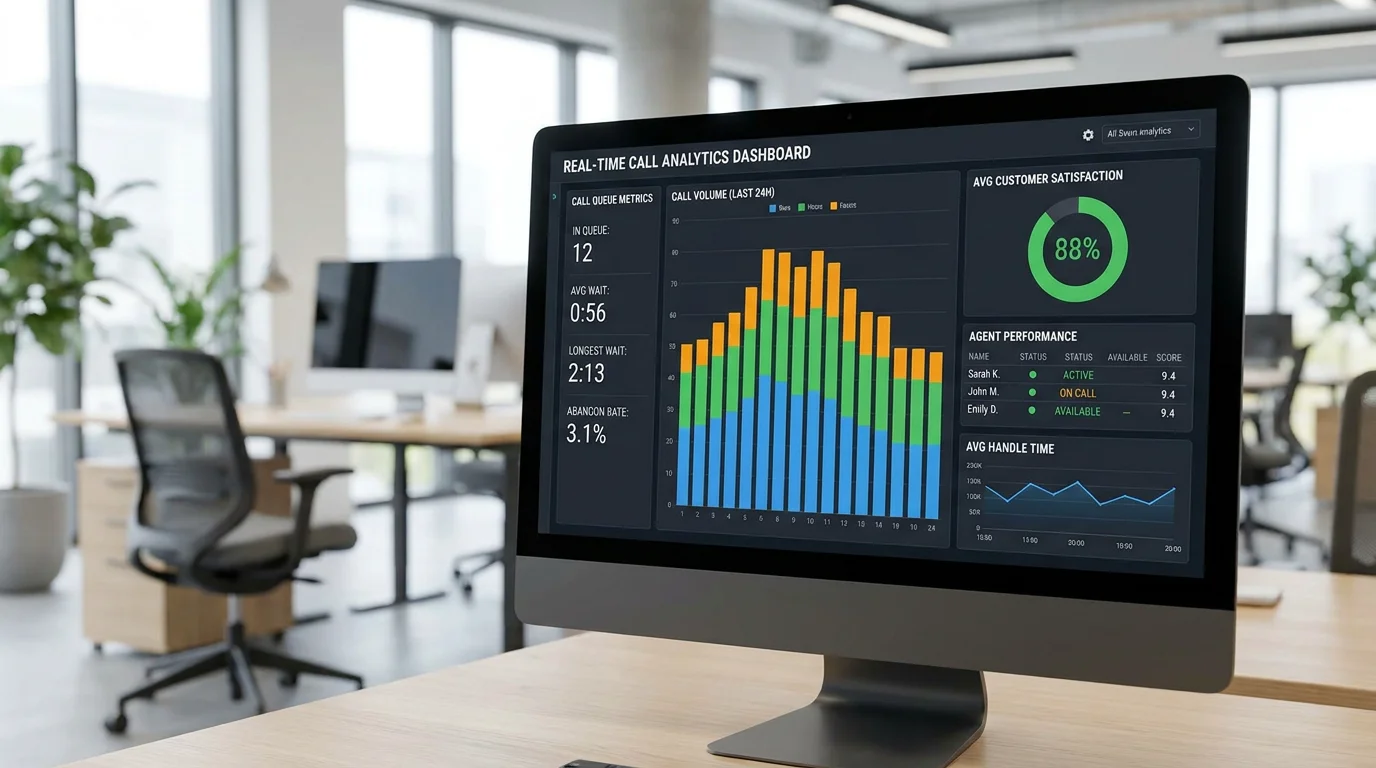
Dashboards that display call volume trends, agent performance metrics, and customer sentiment in real time empower supervisors to make data-driven decisions. The ability to customize reports and set automated alerts ensures that no bottleneck goes unnoticed.
Omnichannel Integration
Customers expect to reach businesses through voice, SMS, live chat, email, and social media. An automated platform synchronizes all channels so that context follows the customer, regardless of how they choose to communicate. CCaaS platforms are increasingly integrating omnichannel capabilities, and by 2026, omnichannel solutions are projected to account for 45% of the CCaaS market.
Call Recording and Quality Assurance
Automated call recording, paired with AI-driven sentiment analysis, allows managers to review interactions at scale. Rather than sampling a handful of calls manually, quality assurance tools can score 100% of conversations and flag compliance risks automatically.
How Automation Reduces Costs Without Sacrificing Quality
One of the most compelling arguments for automation is its impact on operating expenses. Cloud-based platforms eliminate the need for on-premises hardware, while AI-driven self-service deflects a significant portion of routine calls away from live agents.
According to Global Growth Insights, approximately 37% of call centers are adopting robotic process automation to streamline repetitive tasks and reduce operational costs. When virtual agents handle password resets, appointment confirmations, and billing inquiries, human agents are freed to focus on complex, high-value interactions that require empathy and judgment.
The cost equation extends beyond headcount. Workforce management modules use machine learning to forecast call volumes and optimize scheduling, ensuring that you are neither overstaffed during quiet periods nor understaffed during surges. Flexible, tiered pricing models (common across SaaS platforms) mean you pay only for the capacity you need. We designed our cloud-based contact center software with this principle in mind, starting at $16.99 per user per month with no hardware required.
The Role of AI in Modern Call Center Automation
According to industry data, 88% of contact centers report using some form of AI-powered solution, but only 25% have fully integrated it into daily operations. This gap represents both a challenge and an opportunity. Organizations that move beyond surface-level AI adoption gain a significant edge in efficiency, customer satisfaction, and agent retention.
AI now touches virtually every stage of the customer journey. Predictive routing uses historical data to match callers with the agent most likely to resolve their issue on the first contact. Natural language processing powers conversational IVR and chatbots that understand intent rather than just keywords. Post-call, AI generates summaries, scores interactions, and identifies coaching opportunities for agents.
Generative AI is the latest accelerant. Enterprises are pivoting toward cloud-native, generative-AI-orchestrated engagement platforms that reduce call-handling time and sharpen customer-experience metrics, with GenAI agents now resolving a majority of routine inquiries. For businesses in healthcare, legal services, and financial services, where call complexity and compliance requirements are high, AI copilot modes provide real-time guidance while maintaining the human oversight that regulations demand.
If your team is exploring AI-driven voice capabilities, our AI receptionist answers calls 24/7, schedules appointments, and handles FAQs automatically, so you never miss an opportunity outside business hours.
Cloud Deployment vs. On-Premises: Making the Right Choice
The migration to cloud-based call center solutions continues to accelerate. Nearly 39% of enterprises globally have migrated from traditional call handling systems to cloud-based solutions, while 32% have implemented AI-powered call analytics and virtual agents. Cloud deployment offers clear advantages: faster setup, automatic updates, remote agent support, and elastic scalability.
On-premises solutions still appeal to organizations with strict data sovereignty requirements or legacy infrastructure investments. However, the trade-offs are significant. On-premises deployments require dedicated IT staff, hardware maintenance, and manual software updates. Around 35% of small and medium-sized enterprises report financial strain in adopting advanced software solutions due to complex infrastructure requirements.
For most US businesses, especially those in the SMB and mid-market segments, cloud-hosted platforms represent the more practical and cost-effective path. Solutions like our cloud contact center software deploy in days rather than months, require zero hardware investment, and include enterprise-grade encryption and a 99.9% uptime guarantee.
Comparing Top Automated Call Center Platforms
Selecting the right platform requires weighing features, pricing, scalability, and support against your specific operational needs. The table below offers a high-level comparison of several well-known providers alongside our own solution to help frame your evaluation.
| Provider | Starting Price | Key Strength | AI Features | Hardware Required |
|---|---|---|---|---|
| Cloud Vision Technologies | $16.99/user/month | Integrated VoIP, AI Voice Agent, and Contact Center from one provider | 24/7 AI voice agent, automated scheduling, FAQ handling | No |
| Nextiva | $75/agent/month | All-in-one omnichannel suite | Workflow automation, campaign management | No |
| Five9 | Contact for pricing | Agent management and IVAs | Interaction analytics, workforce optimization | No |
| RingCentral | Varies by plan | Omnichannel pricing flexibility | AI routing, call summaries | No |
| Dialpad | Varies by plan | Outbound calling and agent flexibility | Real-time transcription, coaching | No |
Price alone does not determine value. A platform that costs less per seat but requires extensive configuration, third-party add-ons, or long-term contracts may prove more expensive over time. We recommend evaluating total cost of ownership, including implementation, training, and ongoing support. Our platform bundles three integrated products (Hosted VoIP, AI Voice Agent, and Cloud Contact Center) from a single provider, simplifying vendor management and reducing hidden costs.
Industry-Specific Applications Across the US Market
Automated call center platforms are not one-size-fits-all. The features that matter most depend heavily on your industry vertical and the nature of your customer interactions.
Healthcare and Dental Practices
Patient scheduling, appointment reminders, and after-hours triage are ideal use cases for AI-powered voice agents. Automation ensures that no call goes unanswered, even outside office hours, while maintaining HIPAA-compliant data handling.
Legal and Professional Services
For law firms, intake automation captures caller information, qualifies leads, and routes urgent matters to the appropriate attorney. Recorded calls and AI-generated summaries create a reliable audit trail for client communications.
Sales Organizations and E-Commerce
Outbound auto dialers, predictive dialing, and CRM integration allow sales teams to maximize talk time and minimize idle periods. Real-time dashboards give managers visibility into campaign performance and agent productivity. Businesses seeking dedicated inbound call center software can pair it with outbound tools for a complete mixed-use environment.
Financial Services
Compliance-sensitive industries benefit from automated call recording, quality scoring, and bank-grade encryption. AI copilot features assist agents with regulatory scripts while flagging potential compliance deviations in real time.
How to Choose the Right Automated Solution for Your Business
With dozens of platforms available, narrowing your options requires a structured evaluation process. Consider the following criteria before committing to a vendor.
- Scalability: Can the platform grow with your team? Look for subscription-based models that allow you to add or remove seats without penalty.
- Integration ecosystem: Does it connect with your existing CRM, helpdesk, or EHR system? Native integrations reduce friction and improve data accuracy.
- Deployment speed: Cloud-native solutions can go live in days. If a vendor quotes weeks or months for implementation, question why.
- Security and compliance: Verify encryption standards, data residency options, and industry-specific certifications (HIPAA, PCI-DSS, SOC 2).
- Support quality: Dedicated account management and responsive technical support are critical, especially during the first 90 days after deployment.
- Total cost of ownership: Factor in per-user fees, add-on costs, training, and any required hardware.
Request live demos (not just recorded walkthroughs) from your shortlisted vendors. Test the platform with realistic call scenarios that mirror your daily operations. Pay close attention to the supervisor experience: if managers cannot easily monitor, coach, and report, the platform will underdeliver regardless of its agent-facing features.
Looking Ahead: What to Expect from Call Center Automation
The trajectory of this market leaves little room for doubt. According to Mordor Intelligence, the contact center software market is projected to reach $85.04 billion in 2026 and $184.24 billion by 2031, growing at a CAGR of 16.72%. Several trends are shaping what comes next.
Agentic AI is moving beyond scripted responses toward autonomous decision-making within defined guardrails. Expect virtual agents that can handle multi-step processes (scheduling, rescheduling, payment collection) without human escalation. Hyper-personalization, powered by real-time data from CRM systems and behavioral analytics, will allow platforms to tailor every interaction to the individual caller rather than a broad customer segment.
Voice biometrics and advanced authentication will reduce friction in identity verification, particularly in financial and healthcare settings. Meanwhile, the continued convergence of UCaaS and CCaaS will blur the line between internal collaboration and external customer engagement, giving organizations a single platform for all communication needs.
The organizations that invest in automated call center solutions now will be best positioned to absorb these innovations as they mature, building on a cloud-native foundation rather than retrofitting legacy systems.
For businesses ready to modernize their customer communications with a platform that combines hosted VoIP, AI voice capabilities, and a full contact center suite, explore our cloud-based contact center solution and book a free demo to see the difference firsthand.
Frequently Asked Questions
What is the difference between a call center and a contact center?
A call center traditionally handles voice calls only, while a contact center manages interactions across multiple channels, including voice, email, chat, SMS, and social media. Most modern automated platforms function as contact centers, providing omnichannel capabilities that meet customers wherever they choose to communicate.
How long does it take to deploy an automated call center platform?
Cloud-based solutions typically deploy in a matter of days rather than weeks or months. Our platform, for example, requires no hardware and can be operational within days, with dedicated support to guide your team through setup and onboarding.
Is automated call center software suitable for small businesses?
Yes. Tiered pricing models and cloud deployment have made enterprise-grade automation accessible to businesses of all sizes. Small and mid-market companies benefit from reduced staffing needs, 24/7 call coverage through AI voice agents, and the ability to scale seats up or down based on demand.